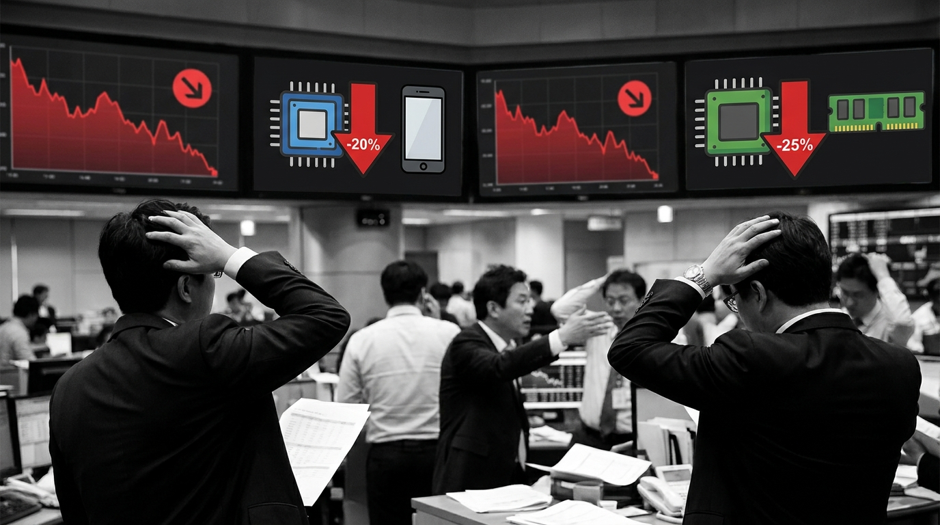
A losing trade does not automatically mean a bad decision
You can enter a trade for a clear reason, keep the position small, follow your exit plan, and still lose money. No trading rule can guarantee what the market will do next. Equally, a trade taken without a plan can produce a profit. That profit does not prove the decision was sensible. This is why reviewing a trade requires more than checking whether the final number is positive or negative. Record why you entered, how much you planned to risk, where you exited, and whether you followed your rules. If you ignored your risk limit, that mistake needs attention immediately. If you followed the plan and lost, record the result and compare it with other trades taken under the same rules. Your trading journal should help you identify repeated problems rather than judge yourself by one outcome.
The full series tells you more than the winning percentage
Imagine a hypothetical series of 20 trades. Eight trades earn $150 each, giving you $1,200 in total profits. The other 12 lose $75 each, producing $900 in total losses. You finish with a $300 profit before trading costs, even though you lost on 60% of your trades. The reason is simple. Each winner earned twice as much as each loser cost. This is why the number of winning trades alone cannot tell you whether an approach makes money. You also need to measure the average profit, the average loss, and costs such as commissions and spreads. Twenty trades illustrate the calculation, but they do not prove that a strategy will remain profitable. Keep reviewing comparable trades over time, including periods when market conditions change. A weekly result is useful to record, but the calendar alone does not provide enough evidence to judge a strategy.
Your reaction can cost more than the original loss
Suppose you have $5,000 and plan to risk $50 on a trade. That is 1% of your account. After losing that amount, you raise the next trade’s planned risk to $250 because you want to recover quickly. You have now increased the amount at risk five times. The original loss has started changing decisions that should depend on your trading rules. Another loss could therefore cause much more damage. A previous loss does not give you a reason to expect the next trade to win, and Friday approaching does not make a weak opportunity better. Set your risk limits before entering, and avoid increasing them simply to recover money. Keeping individual losses manageable gives you more room to assess your approach across a series of trades. There is also no need to force extra trades just to finish the week in profit.
Conclusion
One trade deserves a review, but it should not control every decision that follows. A useful assessment looks at repeated results, average profits and losses, trading costs, and whether you followed your rules. A losing trade can fit within a profitable series, while a winning trade can hide a poor decision. The goal is to keep each result in proportion, protect your capital, and build enough evidence to understand what needs to improve.
This marketing material is provided for informational purposes only and does not constitute investment advice, a recommendation, or an offer or solicitation to buy or sell any financial instruments.
Trading in securities involves significant risk and may not be suitable for all investors. Prices of securities may fluctuate significantly and may result in a total loss of your investment. Investors should be aware that losses may exceed potential profits when buying and selling securities. In certain market conditions, you may sustain losses that exceed your initial investment. Securities and contracts for differences are complex financial instruments that require a high level of knowledge and understanding. You should carefully consider whether you understand how these instruments work and whether you can afford to take the high risk of losing your money.