
A Poem From Orbit
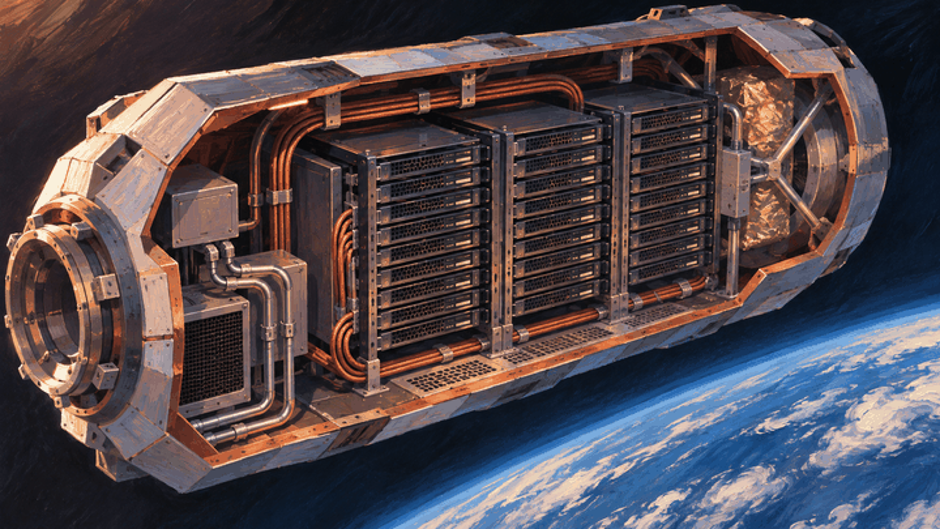
On 30 October, Google reported that its Project Suncatcher prototype received a prompt from the ground and returned a haiku generated by a model running onboard. Beijing’s municipal portal reported on 10 November that a separate Chinese prototype had tested onboard computing and cooling and run AI tasks. Processing data aboard the satellite that collects it can spare operators from sending raw data to Earth. Split a single large AI training job across several satellites, though, and the links between them have to keep the chips supplied with data.
The Cost of Working in Orbit
Solar panels in some orbits can get nearly continuous sunlight, while hot chips still need radiators to shed heat into space. Those radiators add weight to each satellite, and radiation exposure can affect how long the chips keep working. In its one-gigawatt cost model, Forethought found that orbital computing could approach the cost of a favorable ground-based buildout if launch costs fell to around $100 per kilogram and server and cooling hardware got lighter. Boston Consulting Group’s 20-year cost comparison still found a premium for space in its most favorable scenario, using a different set of assumptions about launch costs, weight, failures and the cost of electricity on Earth.
How SpaceX Would Retire Satellites
SpaceX plans to test Starmind satellites at lower altitudes before moving them higher, using onboard propulsion to maneuver away from potential collisions. At the end of service, the company plans to steer functioning satellites into the atmosphere over the ocean, with the spacecraft designed to burn up on re-entry. The FCC accepted the debris measures for orbits below 600 kilometers and requires SpaceX to file a final debris mitigation plan before deploying satellites above that altitude, a condition that affects four of the six listed altitude bands. The agency deferred SpaceX’s request to use alternative disposal orbits instead of atmospheric re-entry for some satellites.
The Debris Already Up There
A failed Starmind satellite may lose the ability to steer itself out of danger, and shorter spacecraft lifetimes would mean paying for more replacements and managing more retirements. The European Space Agency’s 2026 space environment report, based on data through the end of 2025, found that too few satellites were leaving congested orbits at the end of service. SpaceX’s plan covers its own fleet, while a separate UK government mission, announced in October 2026, aims to capture and lower two defunct satellites by 2032.
Who Shares the Risk
In a December 2025 statement, China’s UN mission raised collision concerns about large constellations and cited what it described as Starlink’s close approaches to China’s space station, almost a year before the Starmind decision. Under Article IX of the Outer Space Treaty, countries that are party to the treaty must take account of one another’s interests and can request consultations over potentially harmful interference from another party’s planned activity. The FCC order calls for twice-yearly reports on close encounters, actions to avoid collisions and re-entries. Sustained computing in flight would show how much work the hardware can do in orbit.
This marketing material is provided for informational purposes only and does not constitute investment advice, a recommendation, or an offer or solicitation to buy or sell any financial instruments.
Trading in securities involves significant risk and may not be suitable for all investors. Prices of securities may fluctuate significantly and may result in a total loss of your investment. Investors should be aware that losses may exceed potential profits when buying and selling securities. In certain market conditions, you may sustain losses that exceed your initial investment. Securities and contracts for differences are complex financial instruments that require a high level of knowledge and understanding. You should carefully consider whether you understand how these instruments work and whether you can afford to take the high risk of losing your money.