

The U.S. and Japan have shown unusual cooperation in trying to strengthen the yen, but their policy priorities remain different. Bessent has repeatedly argued that tighter monetary policy is necessary to address the yen’s weakness and has encouraged Japan to give the Bank of Japan more room to raise rates. Takaichi, however, remains cautious about aggressive tightening, fearing that higher rates could undermine Japan’s fragile economic recovery.
That difference became particularly visible during July’s joint intervention, when the two countries intervened to support the yen while the BOJ simultaneously kept its policy rate unchanged at 1%. The yen subsequently gave back much of its gains and is now approaching 160 again.
Intervention Alone May Not Be Enough
The biggest challenge for Japan is the wide interest-rate gap between the U.S. and Japan. While currency intervention can temporarily change market positioning, it cannot fundamentally eliminate the yield advantage of holding dollars.
For the yen to strengthen sustainably, markets may need to see a more hawkish BOJ. Investors are therefore watching closely for signs of another rate hike, potentially as early as September or October.
Options Market Shows Mixed Signals
Currency traders are also preparing for increased volatility ahead of the latest U.S. CPI report. Short-term USD/JPY options continue to show demand for downside protection, reflecting concerns that another round of official intervention could trigger a sharp yen rebound.
However, longer-dated options tell a different story. Investors continue to buy USD/JPY call options, suggesting that some traders still expect the dollar to regain ground against the yen over the longer term. This divergence highlights how uncertain the outlook has become.
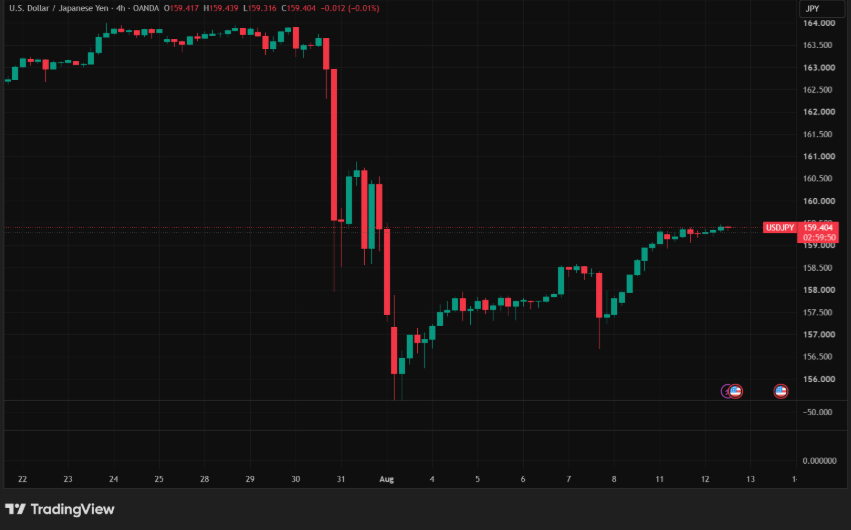
Chart: USD/JPY
Will USD/JPY break above 160 again?
It could depend on these three factors: inflation, BOJ policy and the threat of further intervention.
A softer CPI could weaken the dollar and give the yen some relief. Meanwhile, a more hawkish BOJ could strengthen the case for a sustained yen recovery.
But without a meaningful narrowing of the USD/JPY gap, intervention alone may struggle to deliver a lasting reversal.
This marketing material is provided for informational purposes only and does not constitute investment advice, a recommendation, or an offer or solicitation to buy or sell any financial instruments.
Trading in securities involves significant risk and may not be suitable for all investors. Prices of securities may fluctuate significantly and may result in a total loss of your investment. Investors should be aware that losses may exceed potential profits when buying and selling securities. In certain market conditions, you may sustain losses that exceed your initial investment. Securities and contracts for differences are complex financial instruments that require a high level of knowledge and understanding. You should carefully consider whether you understand how these instruments work and whether you can afford to take the high risk of losing your money.


.png)