
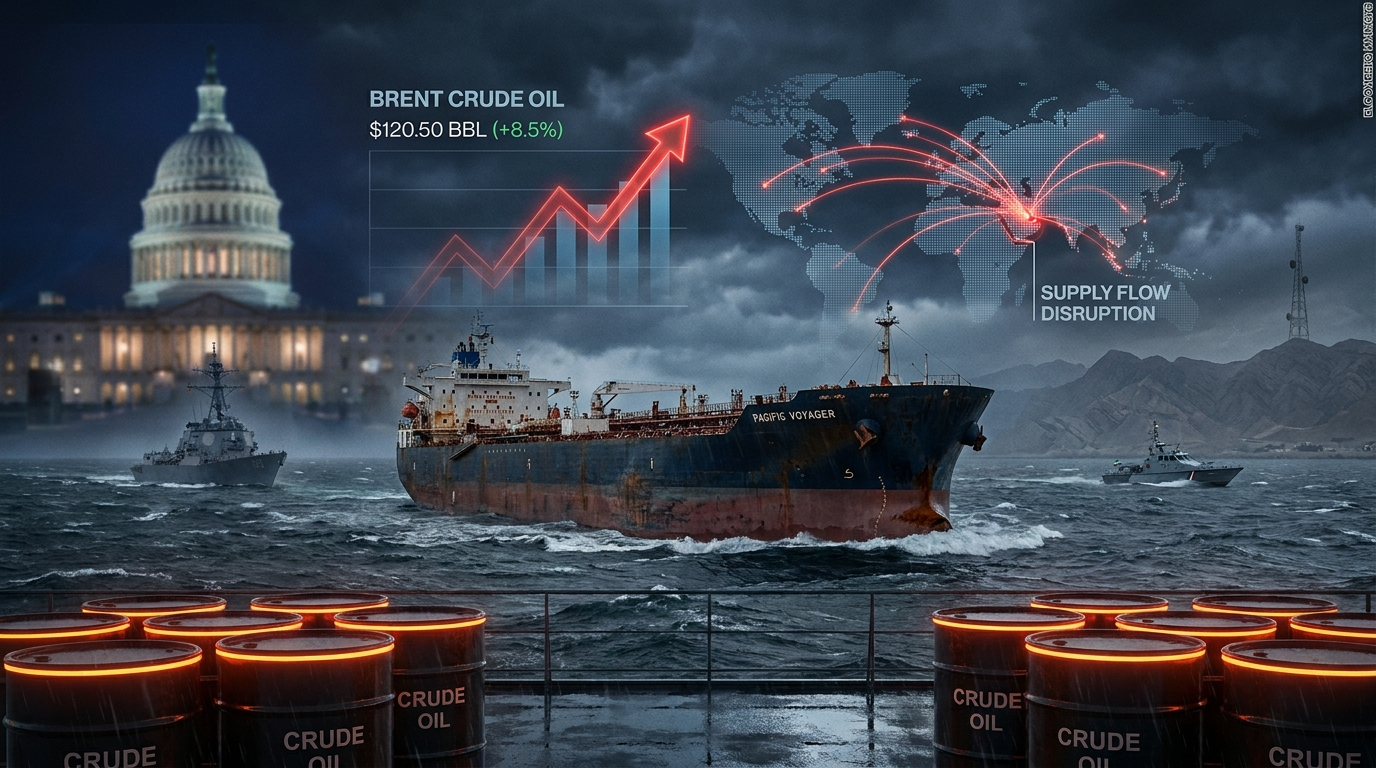
U.S. Treasury Secretary Scott Bessent has signalled that Washington will announce a new package of economic measures against Iran next week, describing the planned action as an unprecedented level of economic isolation. The measures are expected to complement the ongoing maritime blockade by putting additional pressure on Iran’s financial and trading channels.
At the same time, U.S. Defence Secretary Pete Hegseth said the Navy has the ability to maintain the blockade for an extended period through a rotation of naval vessels. The message from Washington is clear: the strategy is shifting toward sustained economic pressure rather than relying solely on military action.
Iran, however, has shown little indication that it is prepared to fully back down. Negotiations over the Strait of Hormuz remain stalled, while continued regional attacks have raised concerns that the conflict could become more prolonged and disruptive.
Oil Supply Faces a Growing Test
The biggest concern for global markets is increasingly the impact on energy supply. The International Energy Agency now expects global oil supply to decline by around 4.3 million barrels per day, while analysts estimate the current effective supply shortfall at roughly 5 million barrels per day.
At first glance, global inventories appear large enough to provide a significant buffer. Government-controlled reserves could theoretically cover the current supply gap for around six months. However, not all stored oil can be released immediately, and a significant portion of commercial inventories is already committed to normal operations and existing supply chains.
This means the real question is not simply how much oil the world has in storage, but how much of that supply can actually reach the market when it is needed.
Refined Fuels Could Become the Next Pressure Point
The vulnerability extends beyond crude oil. Global inventories of diesel and jet fuel are already relatively tight, leaving refined-product markets particularly exposed to further disruptions across Middle Eastern production, refining and shipping routes.
If the conflict continues to damage regional energy infrastructure or restrict shipping through the Strait of Hormuz, governments could face an increasingly difficult choice between releasing strategic reserves to contain prices today or preserving those reserves in case the disruption lasts much longer.
The United States faces an additional constraint. Its Strategic Petroleum Reserve remains well below historical levels, while some analysts have raised concerns about the amount of stored crude that can be rapidly deployed.
The Strait of Hormuz Is the Key Variable
For financial markets, the duration of the disruption may ultimately matter more than the initial shock itself.
A temporary interruption could potentially be absorbed through strategic reserves, commercial inventories and alternative supply routes. But if restrictions around the Strait of Hormuz persist for several months, the impact could become much more significant, pushing crude prices higher and potentially reigniting inflationary pressures around the world.
That would create a difficult environment for central banks, particularly if higher energy prices begin feeding into broader consumer prices.
Conclusion
The global oil market may have enough inventory to withstand a short-term disruption. The real test is whether those buffers remain sufficient if the conflict develops into a prolonged supply shock.
The question for markets is no longer simply whether there is enough oil in the world, but whether enough oil can reach consumers if the Strait of Hormuz remains disrupted for months.
This marketing material is provided for informational purposes only and does not constitute investment advice, a recommendation, or an offer or solicitation to buy or sell any financial instruments.
Trading in securities involves significant risk and may not be suitable for all investors. Prices of securities may fluctuate significantly and may result in a total loss of your investment. Investors should be aware that losses may exceed potential profits when buying and selling securities. In certain market conditions, you may sustain losses that exceed your initial investment. Securities and contracts for differences are complex financial instruments that require a high level of knowledge and understanding. You should carefully consider whether you understand how these instruments work and whether you can afford to take the high risk of losing your money.


.png)