
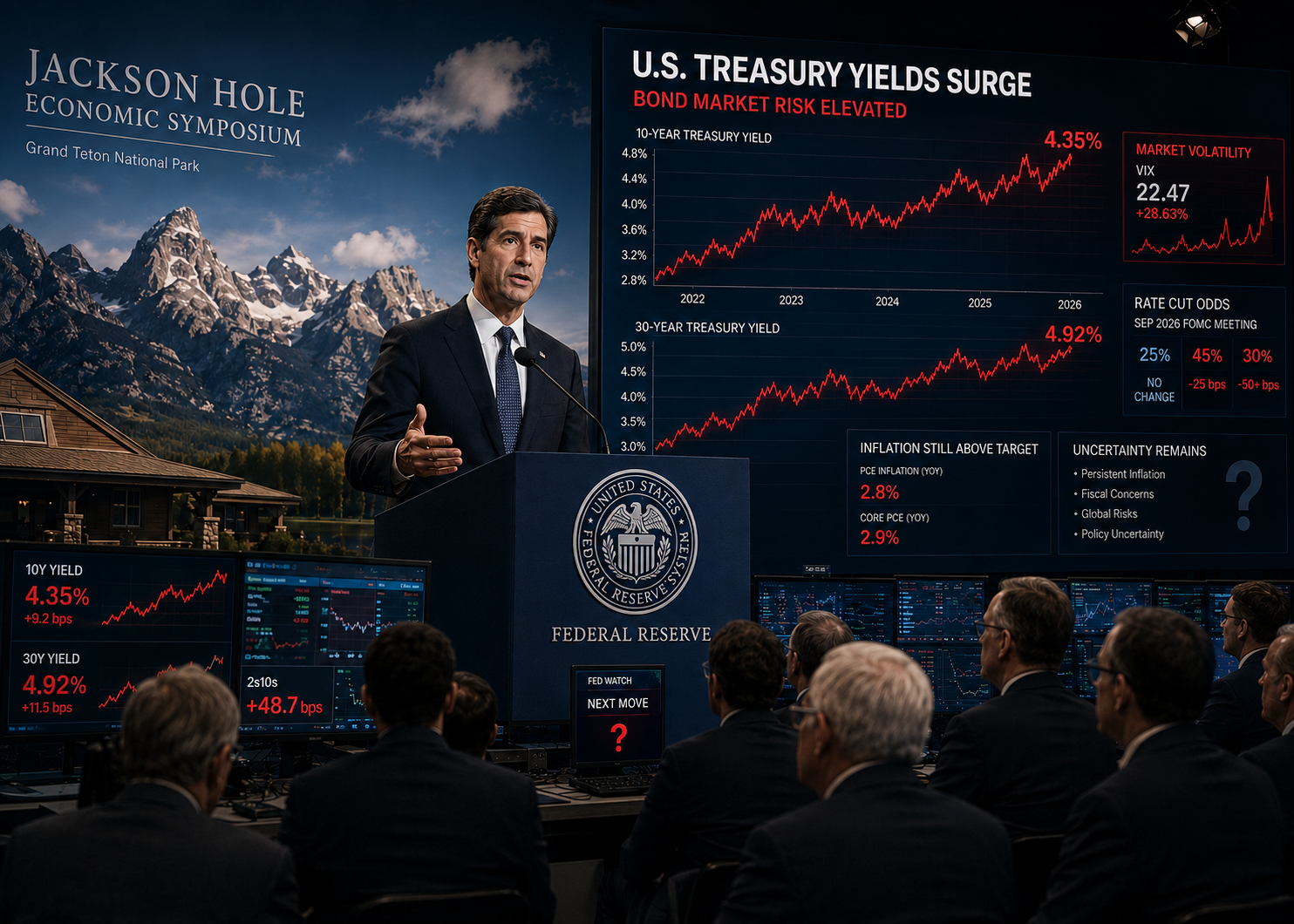
The S&P 500 has struggled to extend its recent record highs, while the 10-year Treasury yield remains around 4.66%. The 30-year yield briefly climbed to 5.34%, its highest level since the global financial crisis, before easing toward 5.20%.
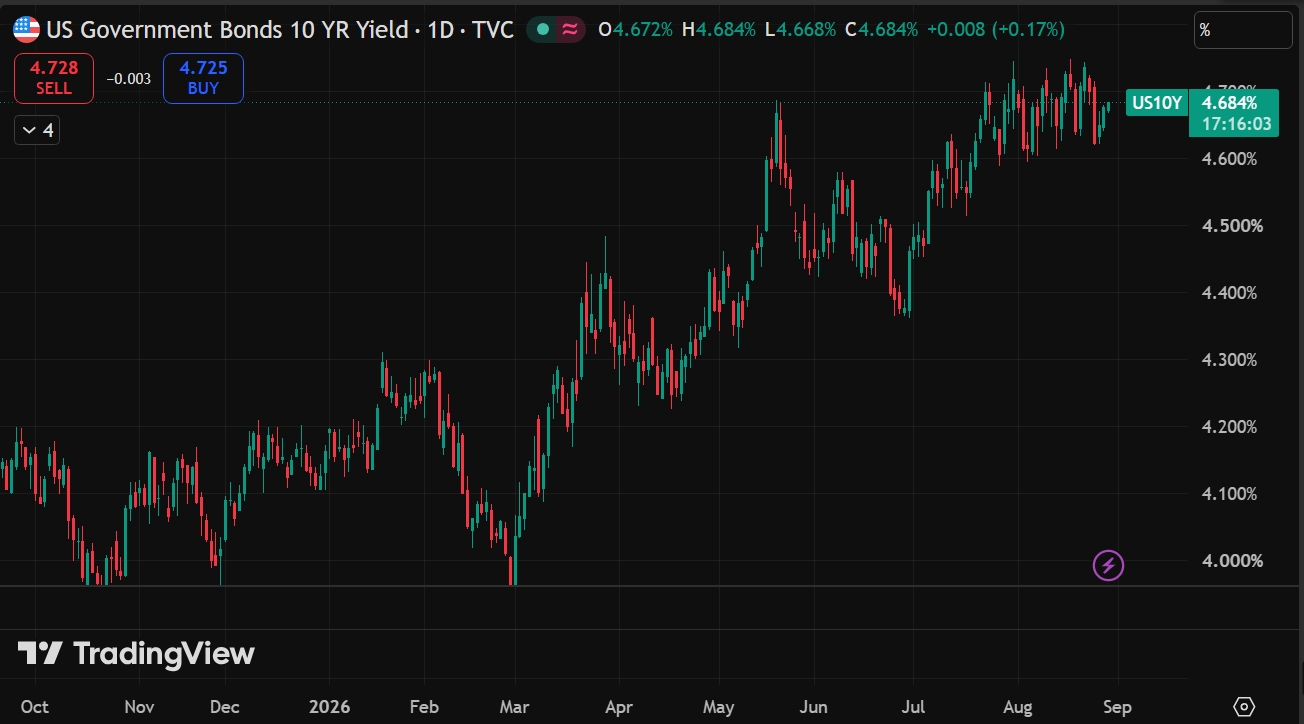
Chart: US 10-Year Government Bonds Yield
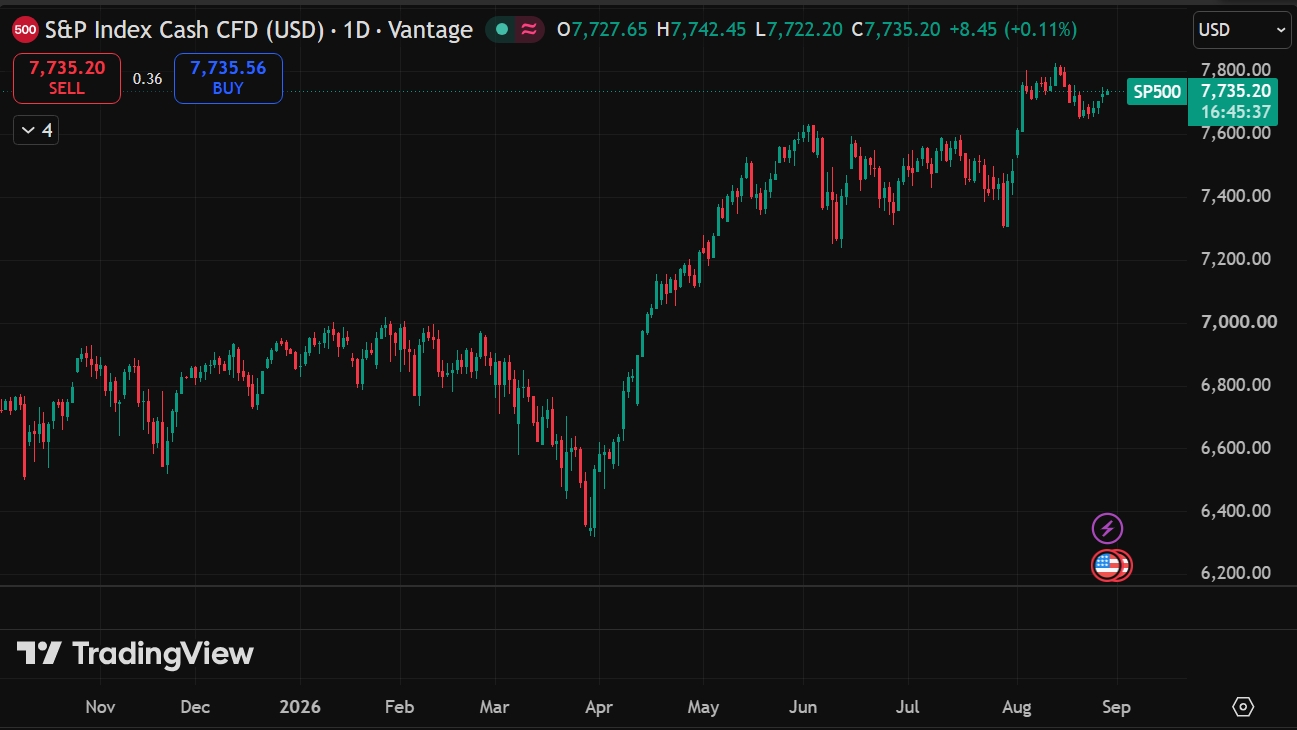
Chart: SP500 Index
At the same time, July PCE inflation rose 3.7% year over year, well above the Fed’s 2% target. Markets currently price roughly a 34% probability of a 25-basis-point rate hike in September.
Since taking office in May, Warsh has emphasized less forward guidance while repeatedly stressing the importance of restoring price stability. But his reluctance to outline a clear reaction function has left investors guessing about how the Fed would respond to different inflation and employment scenarios.
That uncertainty may be the biggest risk heading into Jackson Hole.
Hawkish Could Actually Help Bonds
A key twist is that a hawkish Warsh speech would not necessarily mean higher long-term yields.
If Warsh firmly reaffirms the 2% inflation target and convinces investors that the Fed remains committed to controlling prices, confidence in the central bank could improve. That could reduce the term premium investors demand to hold long-duration Treasuries and potentially push 30-year yields lower.
According to Reuters, JPMorgan’s Priya Misra has argued that restoring confidence in the Fed’s inflation-fighting credibility could ease some of the concerns weighing on bonds.
The Yield Curve Holds the Key
Three scenarios are now emerging.
If Warsh delivers a credible anti-inflation framework, long-term Treasuries could rally and high-growth technology stocks could benefit from falling discount rates.
If he directly reinforces expectations for tighter policy, short-term yields could rise first, putting pressure on equity valuations.
But the most dangerous outcome may be another vague speech. If investors conclude that the Fed lacks a convincing framework, long-term yields could retest their recent highs, raising borrowing costs and pressuring stocks.
2022 Offers a Warning
The market still remembers Jerome Powell’s 2022 Jackson Hole speech, when his blunt anti-inflation message helped send the S&P 500 down 3.4% that day.
But today’s backdrop is more complicated. With debt exceeding $40 trillion, persistent fiscal deficits, heavy Treasury issuance and rising AI-related capital demand, long-term yields face structural upward pressure.
For markets, the real question on Friday may therefore be less about whether Warsh sounds hawkish or dovish, and more about whether 30-year Treasury yields fall or break higher.
This marketing material is provided for informational purposes only and does not constitute investment advice, a recommendation, or an offer or solicitation to buy or sell any financial instruments.
Trading in securities involves significant risk and may not be suitable for all investors. Prices of securities may fluctuate significantly and may result in a total loss of your investment. Investors should be aware that losses may exceed potential profits when buying and selling securities. In certain market conditions, you may sustain losses that exceed your initial investment. Securities and contracts for differences are complex financial instruments that require a high level of knowledge and understanding. You should carefully consider whether you understand how these instruments work and whether you can afford to take the high risk of losing your money.


.png)