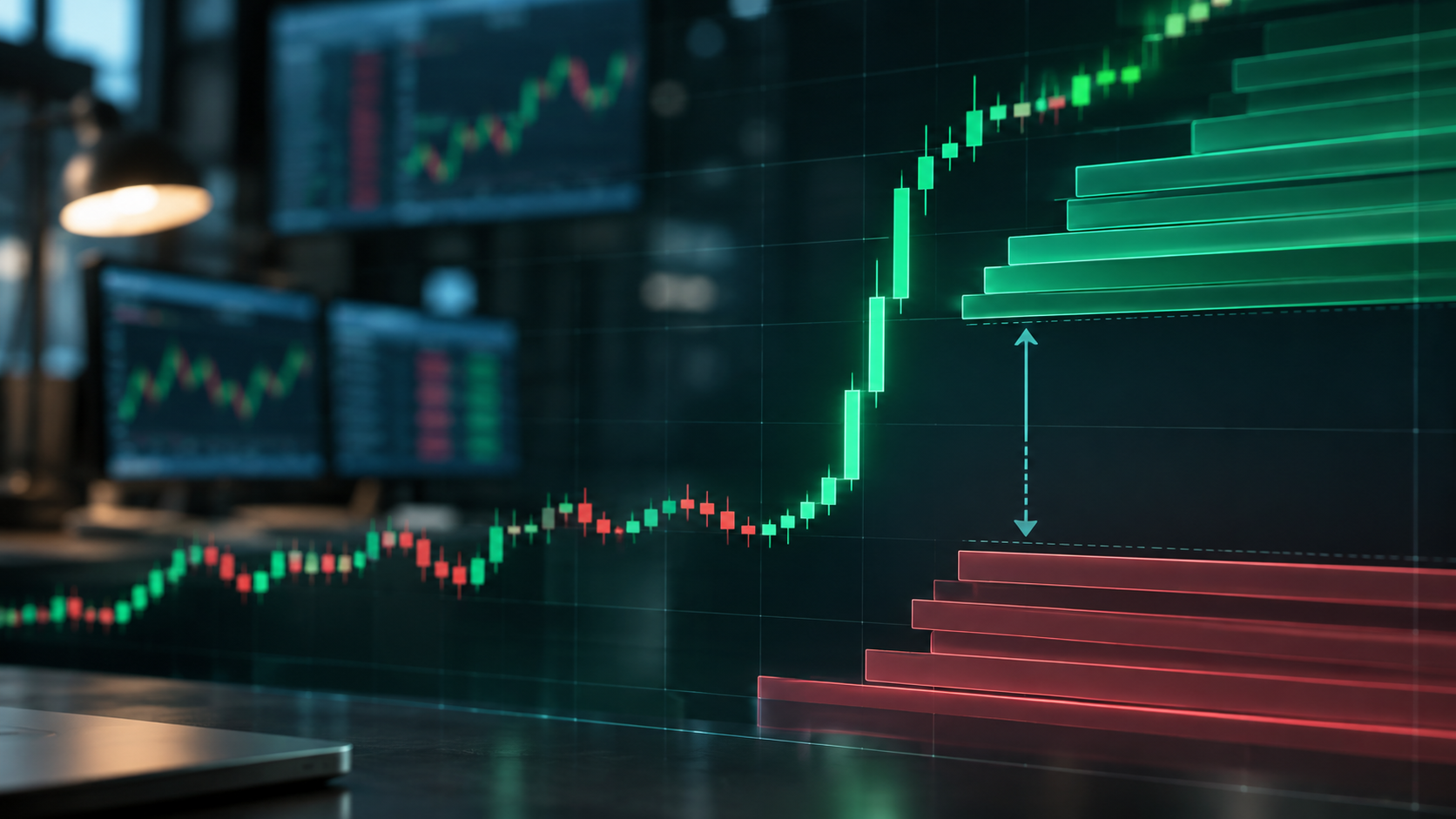
Trading volume and market depth are two different things
Trading volume measures the quantity of an asset or financial instrument traded during a specific period. Market depth, on the other hand, represents the quantity of buy and sell orders available at different prices. On centralized exchanges, these orders are organized in an order book. Buy orders are displayed on the bid side, while sell orders appear on the ask side. When a trader places a market buy order, the exchange matches it against available sell orders, beginning with the lowest asking price. If there are not enough sellers at that level, the remaining quantity must be matched at higher prices. The opposite applies to market sell orders, which can move prices lower when available buying interest is limited. This explains why two markets with similar trading volumes can experience very different price movements. The amount traded matters, but so does the liquidity available to absorb those transactions.
How a liquidity vacuum develops
Consider a stock trading at an asking price of $100, with only 40 shares available for purchase at that level. The next available sell order contains 60 shares at $100.30. If someone submits a market order to buy 100 shares, the first 40 can be executed at $100 and the remaining 60 at $100.30. The last transaction therefore occurs 0.3% above the original asking price, even though only 100 shares were purchased. This simplified example illustrates what happens when there are insufficient opposing orders near the current market price. The effect can become more pronounced during major economic announcements or periods of uncertainty, when market makers reduce the number or size of their quotes to limit exposure to sudden price changes. The relationship between volume and liquidity was particularly visible during the market turmoil of March 2020. According to CME Group, trading volume in E-mini S&P 500 futures increased by 85% during the week beginning March 16 compared with the week of January 20, while displayed order-book depth declined by approximately 90%. Trading activity was substantially higher, yet the quantity of orders available in the book at any given moment was much lower.
What traders should monitor before entering a position
A large candlestick accompanied by relatively low volume does not automatically indicate a liquidity vacuum. It is necessary to consider other market conditions, particularly the bid-ask spread, available market depth and the quality of order execution. Market depth alone can also be misleading because new orders may arrive quickly as existing ones are executed. The bid-ask spread represents the difference between the highest available buying price and the lowest selling price. When this difference widens, entering or exiting a position can become more expensive. Another important factor is slippage, which occurs when an order is executed at a price different from the one expected. These considerations are especially relevant during volatile trading sessions. Stop-loss orders can help manage risk, but they do not guarantee execution at the specified price. In retail forex and CFD trading, execution also depends on the broker's pricing and liquidity arrangements, since there is no single centralized order book covering the entire market.
Conclusion
A sharp price movement does not always require exceptionally high trading volume. Sometimes the decisive factor is the limited availability of orders on the opposite side of the market. When liquidity decreases, relatively modest transactions can produce larger price changes and less favorable execution conditions. Trading volume remains useful, but it cannot explain market behavior on its own. Traders should also consider how easily their orders can be executed, particularly when volatility increases. Understanding the relationship between volume, market depth and execution costs provides a more complete picture of price movements and the risks associated with trading them.
This marketing material is provided for informational purposes only and does not constitute investment advice, a recommendation, or an offer or solicitation to buy or sell any financial instruments.
Trading in securities involves significant risk and may not be suitable for all investors. Prices of securities may fluctuate significantly and may result in a total loss of your investment. Investors should be aware that losses may exceed potential profits when buying and selling securities. In certain market conditions, you may sustain losses that exceed your initial investment. Securities and contracts for differences are complex financial instruments that require a high level of knowledge and understanding. You should carefully consider whether you understand how these instruments work and whether you can afford to take the high risk of losing your money.