

The currency pair posted solid gains on Tuesday, supported by a stronger US dollar amid renewed US-Iran tensions that have pushed oil prices higher. The dollar’s advance against the yen reflects ongoing safe-haven demand due to escalating Middle East conflicts. Tensions have risen after US President Donald Trump dismissed the possibility of near-term negotiations with Iran, contributing to higher oil prices and exerting additional pressure on the yen. Nevertheless, persistent intervention threats from Japanese officials could limit further upside for the pair.
BoJ signals possible faster rate hikes
Following comments from BOJ policymakers, the USD/JPY briefly dipped toward 162.70 before rebounding above 163. Some BOJ officials have indicated that they are open to speeding rate rises earlier than economists presently predict, even though the bank is generally expected to keep rates at its July meeting after a June rate hike. Additionally, Japan’s Finance Minister Satsuki Katayama has affirmed the country’s preparedness to intervene in the foreign exchange market amid the yen’s decline to four-decade lows. Cabinet Chief Secretary Minoru Kihara also indicated that responses will be calibrated according to currency movements.
USDJPY Technical Analysis
The prevailing trend for USD/JPY remains firmly bullish, though the currency may become overbought in the short term. Currently trading above 163.00, it is important to monitor for potential pullback signals, as price action near these critical levels could influence market direction for the rest of the week. A notable retracement may find support near 162.70 and 162.40, with further declines possibly extending into the 162.00 range. Conversely, sustained strength above 163.00 would reinforce buyer dominance, with resistance levels at 163.40 and 163.60.
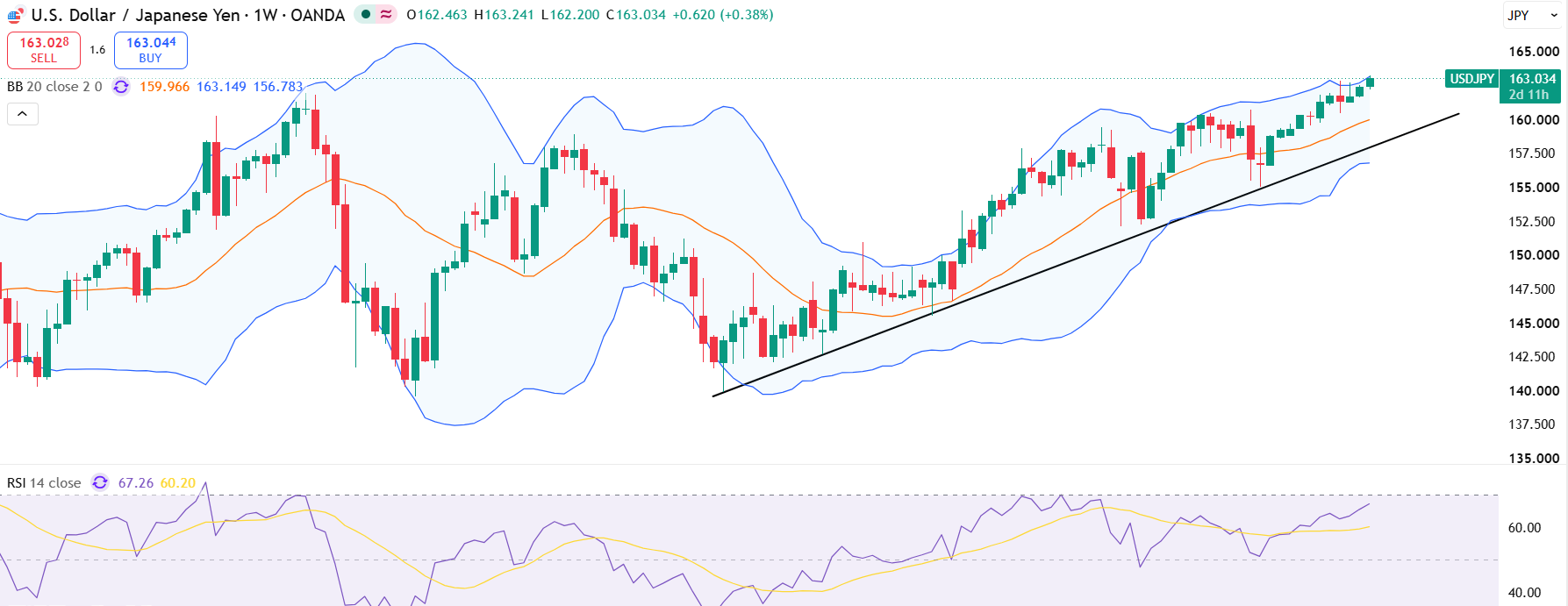
Summary: The overall momentum is bullish, but the risk of intervention remains elevated, particularly around the 163.00 resistance zone. This level could prove critical, potentially prompting renewed BOJ intervention. Any sharp rejection near recent highs may trigger heightened volatility to the downside.
This marketing material is provided for informational purposes only and does not constitute investment advice, a recommendation, or an offer or solicitation to buy or sell any financial instruments.
Trading in securities involves significant risk and may not be suitable for all investors. Prices of securities may fluctuate significantly and may result in a total loss of your investment. Investors should be aware that losses may exceed potential profits when buying and selling securities. In certain market conditions, you may sustain losses that exceed your initial investment. Securities and contracts for differences are complex financial instruments that require a high level of knowledge and understanding. You should carefully consider whether you understand how these instruments work and whether you can afford to take the high risk of losing your money.


.png)