

A Breakthrough in Treatment Options
Fayuvi makes history as the first gene therapy and the only available treatment for paediatric patients with mucopolysaccharidosis type IIIA (MPS IIIA), better known as Sanfilippo syndrome type A. This severe disorder progressively damages the brain and the entire nervous system, and until now, no therapy had been available to alter its adverse course. The market responded immediately to the news, with Ultragenyx Pharmaceutical shares surging 10% during the trading day. The significance of this therapeutic breakthrough is also reflected in the FDA’s decision to grant the treatment Orphan Drug, Fast Track and Breakthrough Therapy designations.
Long-Term Losses Remain Substantial
The investor response provides a much-needed boost after an extended period of decline. Ultragenyx Pharmaceutical Inc. shares have lost approximately 85% of their value over the past five years, making the latest gains a promising first step towards a turnaround. The approval of Fayuvi is not only a significant medical milestone but also provides the company with a strong foundation that could help reverse its negative stock market trajectory.
Ultragenyx Pharmaceutical Inc Stock Price Performance Over the Past Five Years [USD]
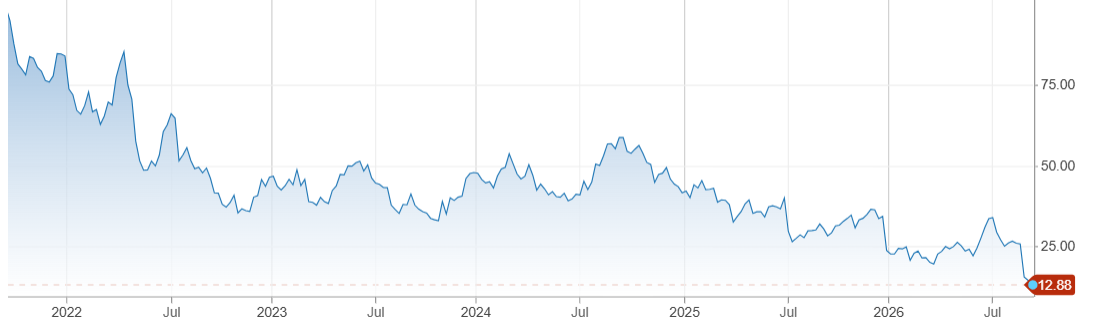
(Source: CNBC)
Replacing a Faulty Gene
The therapy works through modern genetic technology. Fayuvi is administered as a single intravenous infusion, using a modified adeno-associated virus serotype 9 to deliver a fully functional copy of the SGSH gene directly into cells. This enables them to begin producing sulfamidase, an enzyme that patients lack or have at critically low levels. The safety and efficacy of this approach were demonstrated in an open-label, single-arm, multicentre study involving children aged 2 to 5, in which treated patients maintained or even improved their cognitive function compared with a historical control group of untreated children.
Efficacy Comes with Risks
As with any breakthrough treatment, promising results come with safety warnings. Adverse reactions reported in more than 5% of patients included elevated liver enzymes and amylase, nausea, vomiting, fever, decreased appetite, and reduced white blood cell and platelet counts. The FDA also specifically highlights the risk of thrombotic microangiopathy and potential long-term risks, such as tumour development associated with the integration of new genetic material.
Administration Requires Specialist Supervision
Given these risks, the introduction of the therapy into clinical practice comes with strict requirements for comprehensive care. Patients must begin taking corticosteroids one day before the infusion and continue treatment for at least eight weeks. The medicine must be administered exclusively in a specialised healthcare facility fully equipped to manage potential infusion reactions. The arrival of this new treatment option therefore places particular emphasis not only on efficacy but also on careful risk prevention and management during administration and subsequent care.
This marketing material is provided for informational purposes only and does not constitute investment advice, a recommendation, or an offer or solicitation to buy or sell any financial instruments.
Trading in securities involves significant risk and may not be suitable for all investors. Prices of securities may fluctuate significantly and may result in a total loss of your investment. Investors should be aware that losses may exceed potential profits when buying and selling securities. In certain market conditions, you may sustain losses that exceed your initial investment. Securities and contracts for differences are complex financial instruments that require a high level of knowledge and understanding. You should carefully consider whether you understand how these instruments work and whether you can afford to take the high risk of losing your money.
Source:
https://www.cnbc.com/quotes/RARE


.png)