
The Fed Restores Independence
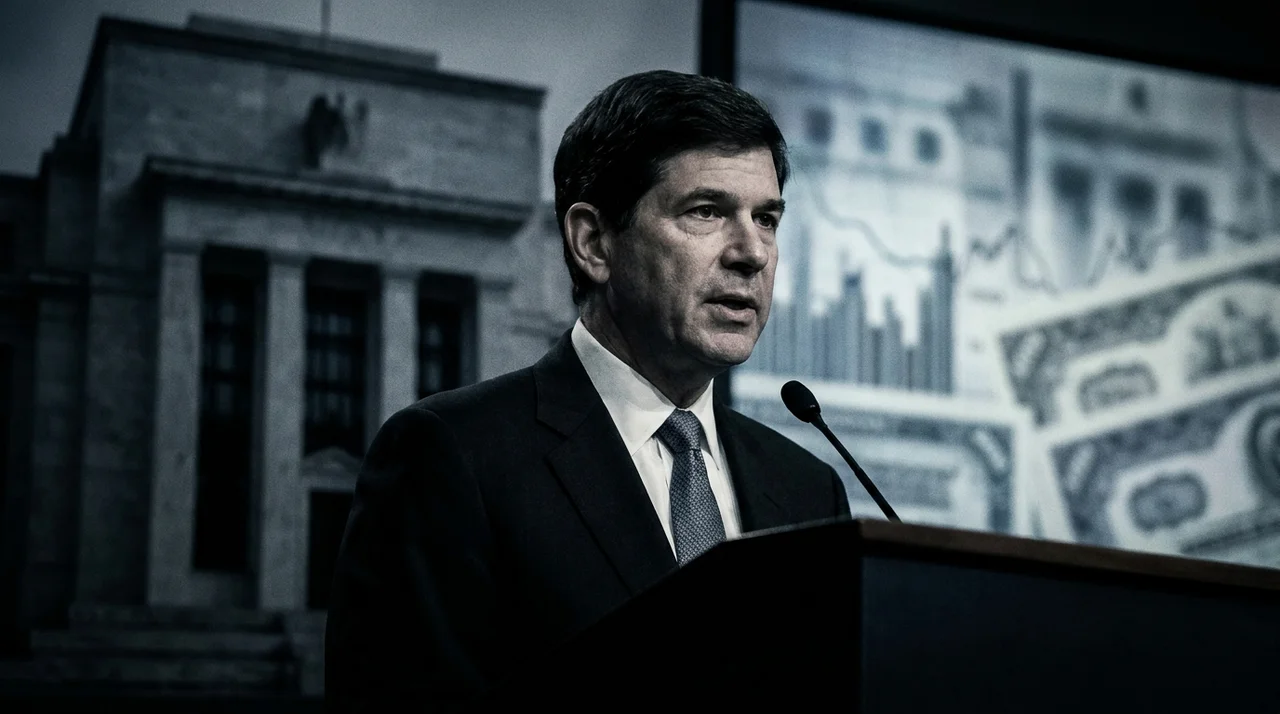
The Federal Open Market Committee unanimously raised its benchmark rate by 25 basis points, its first increase since 2023, with new Fed Chair Kevin Warsh citing high inflation and the need to restore price stability. The move was supported by soaring oil and gasoline prices, rising borrowing costs from a bond selloff, and Fed projections showing a median federal funds rate of 4.1% by the end of 2026. Trump accused the Fed of raising rates for political reasons and to "hurt him," while also saying the U.S. economy was historically strong and shifting his preferred rate target from zero to 1%.
Why 1% Is Still a Fantasy
Bond investors largely agree that 1% interest rates are far from their base case: the term premium is 70 basis points above its long-run median and has stayed positive for more than 440 days, its longest run since 2014. Since March 2023, that premium has climbed 132 basis points, with J.P. Morgan identifying it as the main force behind higher yields and the 30-year Treasury yield jumping more than 20 basis points after the July FOMC meeting. Trump’s claim that U.S. credit is the “best in the world” leaves out mounting concerns over inflation, heavy debt issuance, and fiscal strain, as public debt exceeds 120% of GDP and investors demand more return to offset the risk of inflation eating into bond value.
Treasury’s Buyback Is No Rate-Cut Substitute
The administration expanded Treasury buybacks of longer-dated bonds from $2 billion to as much as $6 billion per operation, mainly to improve liquidity rather than force yields lower. Treasury bought $5.187 billion of 10- to 20-year notes on September 10, but 10-year yields still neared 5% as new debt issuance far exceeded repurchases. Buybacks can ease market strain, but they cannot outweigh large deficits, heavy borrowing, inflation risk, and investors demanding higher returns on long-term U.S. debt.
The Bond Market’s Quiet Victory
Higher term premiums, persistent inflation, and a Fed willing to resist political pressure have pushed the era of ultra-cheap money further out of reach, while Trump has turned to trade threats in an attempt to force rates lower. His shift from “zero, or less” to 1% shows how far expectations have moved while the bond market has imposed a higher-rate reality that political pressure has not reversed.
What the Market Is Really Saying
The bond market is rejecting the idea that 1% rates fit today’s economy, where deglobalization, industrial policy, and heavy debt issuance are keeping inflation risk and term premiums higher. That means governments, companies, and households face structurally higher borrowing costs, while the Fed has less room to slash rates in the next downturn without unsettling markets.
This marketing material is provided for informational purposes only and does not constitute investment advice, a recommendation, or an offer or solicitation to buy or sell any financial instruments.
Trading in securities involves significant risk and may not be suitable for all investors. Prices of securities may fluctuate significantly and may result in a total loss of your investment. Investors should be aware that losses may exceed potential profits when buying and selling securities. In certain market conditions, you may sustain losses that exceed your initial investment. Securities and contracts for differences are complex financial instruments that require a high level of knowledge and understanding. You should carefully consider whether you understand how these instruments work and whether you can afford to take the high risk of losing your money.
.webp)