
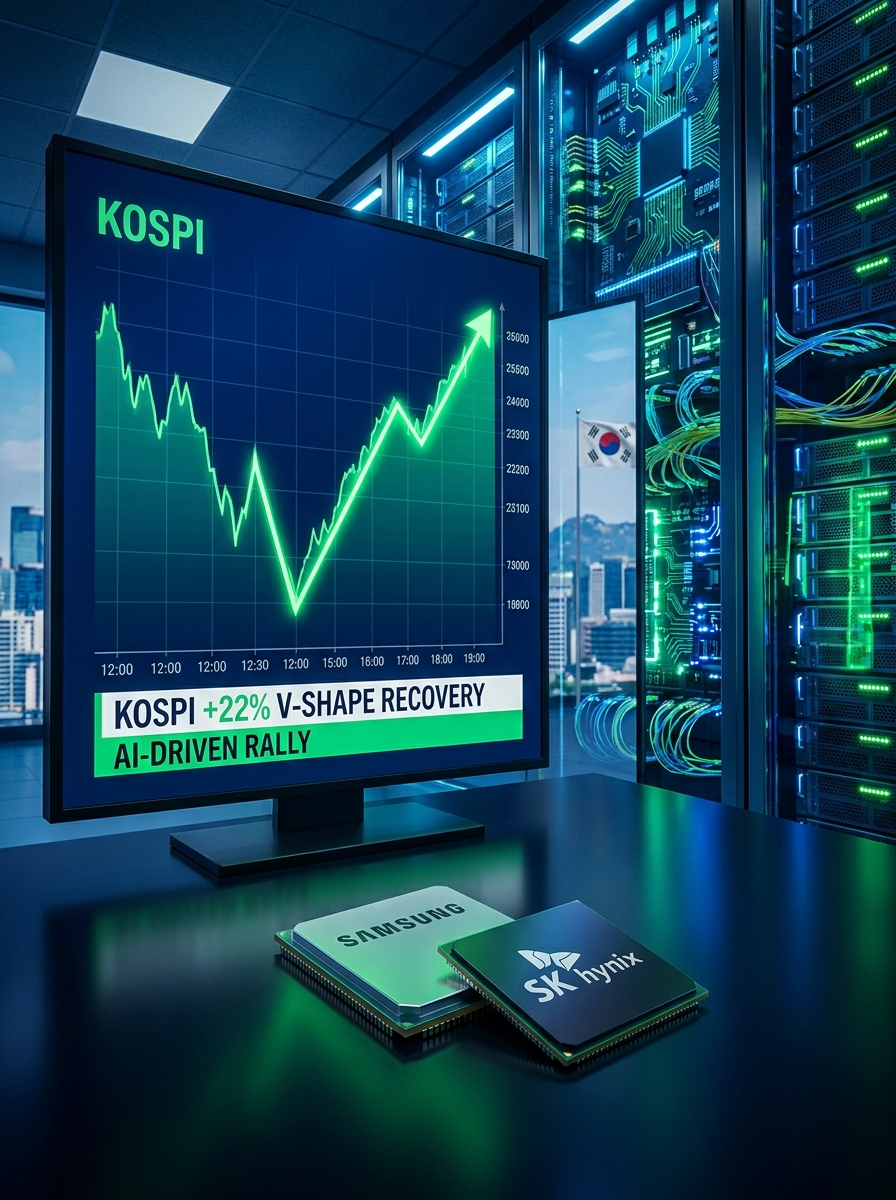
From Selloff to Bull Market
The KOSPI jumped as much as 4.8% on Thursday, extending its rebound from the July 30 low.
Samsung Electronics and SK Hynix, two of the index’s biggest constituents, both gained more than 5%. This turnaround comes just weeks after a brutal July selloff, when leveraged positions in semiconductor stocks were aggressively unwound.
With the Korean government tightening rules around leveraged ETFs and investors reducing margin exposure, some of the forced-selling pressure has now eased.
AI Is Bringing Investors Back
Recent earnings from major technology companies continue to show massive AI capital spending, strengthening expectations for demand for semiconductors, data centres and related infrastructure.
Memory-chip stocks have also started outperforming the broader technology sector for the first time since June. For South Korea, this is particularly important because Samsung Electronics and SK Hynix have an outsized influence on the KOSPI.
Meanwhile, expectations for shareholder-return announcements from both companies have provided another boost to sentiment.
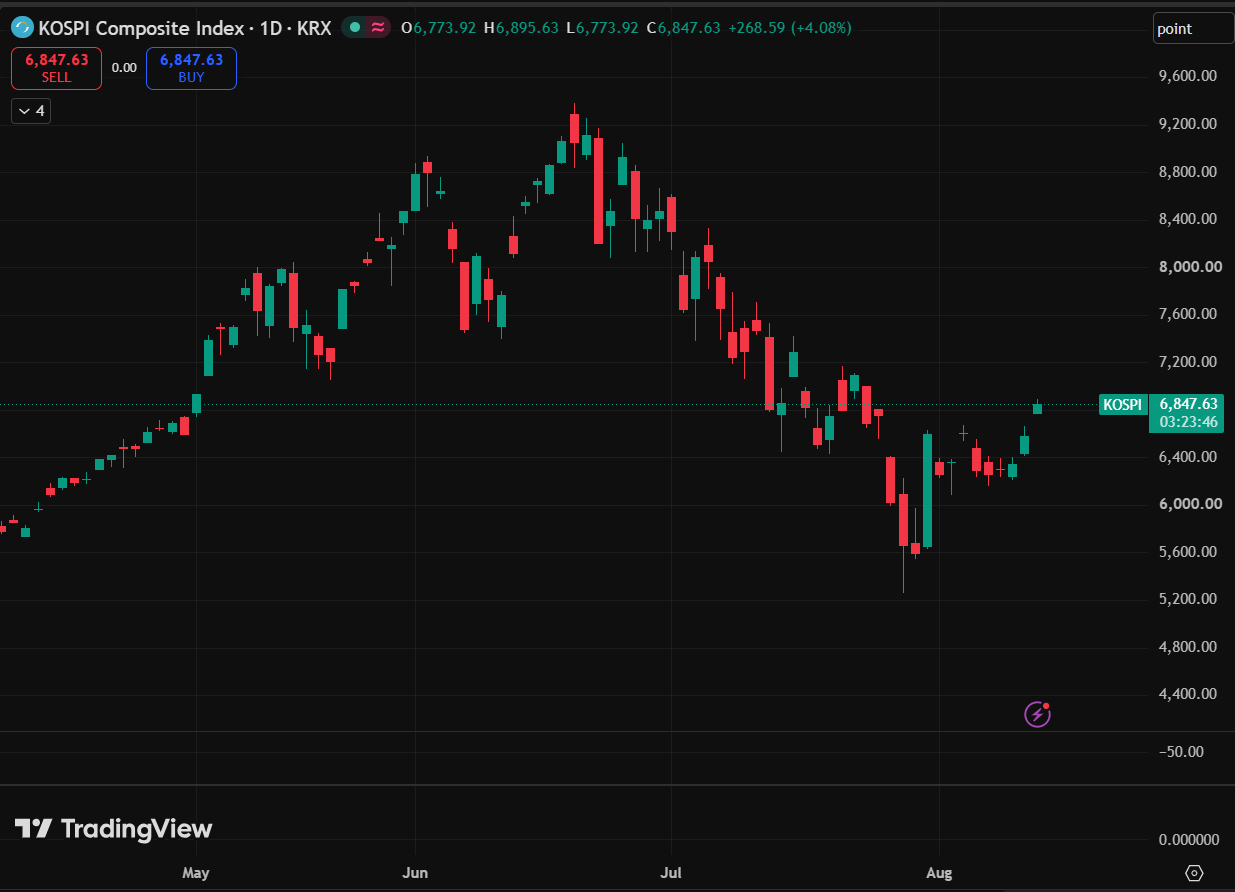
Chart: KOSPI Index
Can the Rally Continue?
Despite the strong rebound, several risks remain. First is the rise in Treasury yields, which could pressure global equities. Second is the stronger dollar, which could also reduce risk appetite toward emerging markets. Third is the capital outflow from KOSPI. Foreign investors have continued to withdraw significant capital from Korean equities this year.
Still, the fundamental outlook for memory chips remains relatively strong. The expansion of AI agents and physical AI is creating new demand for memory chips, while limited global supply could keep the semiconductor market tight.
The Bigger Picture
The KOSPI’s recent rally appears to be more than a purely technical rebound, supported by deleveraging, more attractive valuations, renewed optimism around AI, and strengthening semiconductor demand.
However, whether the 22% recovery can develop into a sustainable bull market will ultimately depend on two key factors: the continued expansion of AI-driven demand and the stability of U.S. interest-rate expectations.
The key question now is whether South Korea’s equity market is entering the early stages of a new bull cycle, or simply experiencing a powerful rebound following July’s sharp sell-off.
This marketing material is provided for informational purposes only and does not constitute investment advice, a recommendation, or an offer or solicitation to buy or sell any financial instruments.
Trading in securities involves significant risk and may not be suitable for all investors. Prices of securities may fluctuate significantly and may result in a total loss of your investment. Investors should be aware that losses may exceed potential profits when buying and selling securities. In certain market conditions, you may sustain losses that exceed your initial investment. Securities and contracts for differences are complex financial instruments that require a high level of knowledge and understanding. You should carefully consider whether you understand how these instruments work and whether you can afford to take the high risk of losing your money.
.png)