
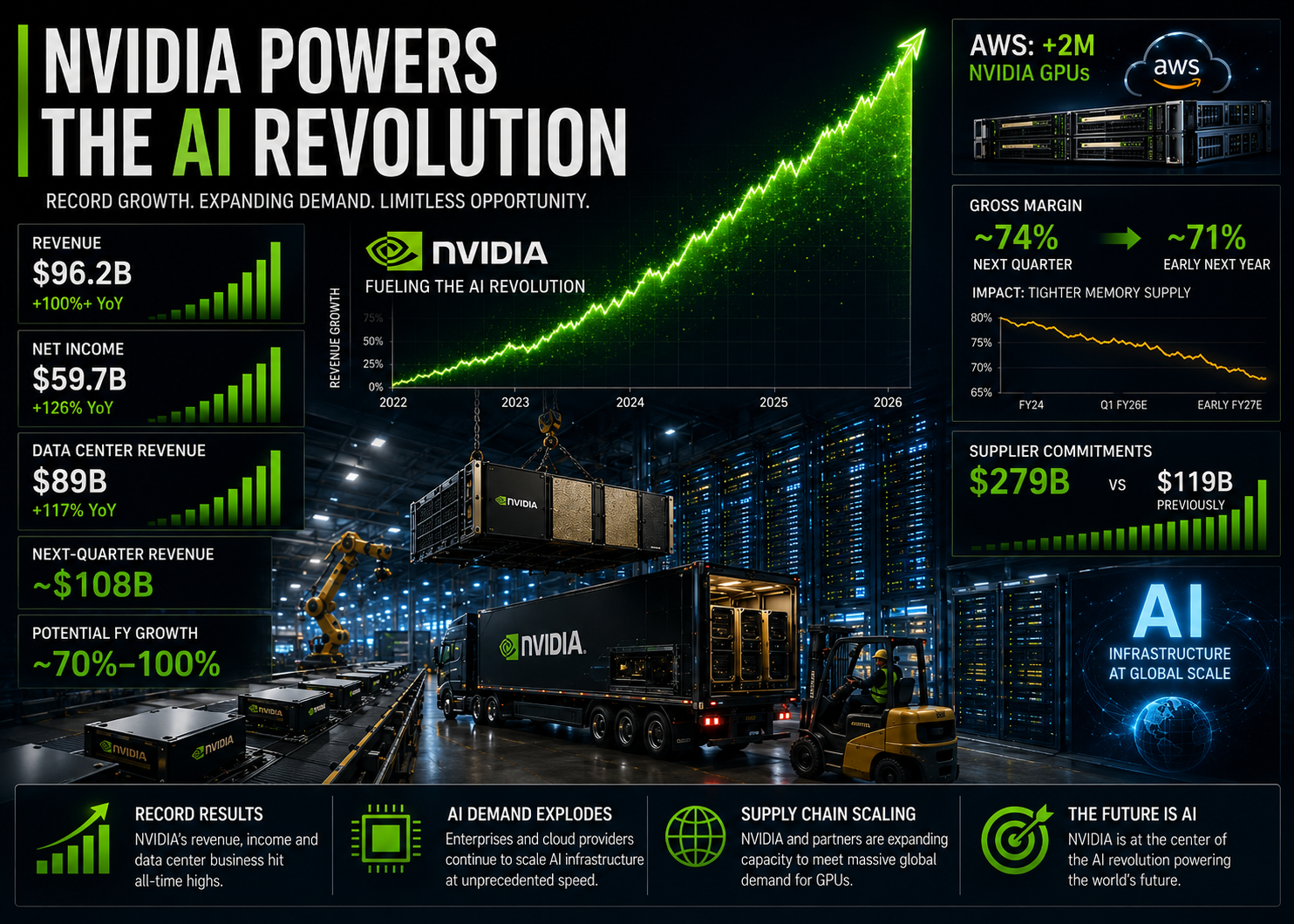
For the quarter ended July 26, Nvidia reported $96.2 billion in revenue, up more than 100% year over year, while net income surged 126% to $59.7 billion. Both figures topped analyst expectations of roughly $92.1 billion and $51.2 billion, respectively.
Data centers remained the main growth engine, generating $89 billion, up 117% from a year earlier.
Nvidia expects next-quarter revenue of around $108 billion, potentially marking the company’s first quarter above the $100 billion threshold.
Demand Could Be Even Stronger
The most striking message came from CFO Colette Kress, who said Nvidia remains constrained by supply. Without those limitations, next fiscal year revenue could potentially double, compared with the company’s current forecast of roughly 70% growth.
CEO Jensen Huang also highlighted a broader customer base. AI infrastructure spending is no longer being driven by just a handful of major laboratories, with more startups and AI companies joining the race for computing capacity.
Amazon Web Services is among the latest major customers, agreeing to deploy an additional 2 million Nvidia GPUs beginning this quarter.
Supply Is Becoming the Bottleneck
The challenge is increasingly shifting from demand to execution. Nvidia expects gross margin to fall to around 74% next quarter and potentially as low as 71% early next year, partly because of tightening memory supplies.
The company’s purchase commitments with suppliers have also surged to $279 billion, up from $119 billion previously, with memory procurement accounting for much of the increase.
Investors Now Face a Bigger Question
Nvidia’s results show that AI demand remains exceptionally strong, but they also highlight growing concerns over capital intensity and so-called “circular financing.”
The company has invested in AI firms that may ultimately use that capital to purchase Nvidia hardware. Huang defended the strategy, arguing that leading AI companies represent a once-in-a-generation opportunity.
For investors, the key question is no longer whether AI demand exists. It is whether Nvidia can secure enough chips, memory and infrastructure to turn that demand into another year of explosive growth.
This marketing material is provided for informational purposes only and does not constitute investment advice, a recommendation, or an offer or solicitation to buy or sell any financial instruments.
Trading in securities involves significant risk and may not be suitable for all investors. Prices of securities may fluctuate significantly and may result in a total loss of your investment. Investors should be aware that losses may exceed potential profits when buying and selling securities. In certain market conditions, you may sustain losses that exceed your initial investment. Securities and contracts for differences are complex financial instruments that require a high level of knowledge and understanding. You should carefully consider whether you understand how these instruments work and whether you can afford to take the high risk of losing your money.


.png)