
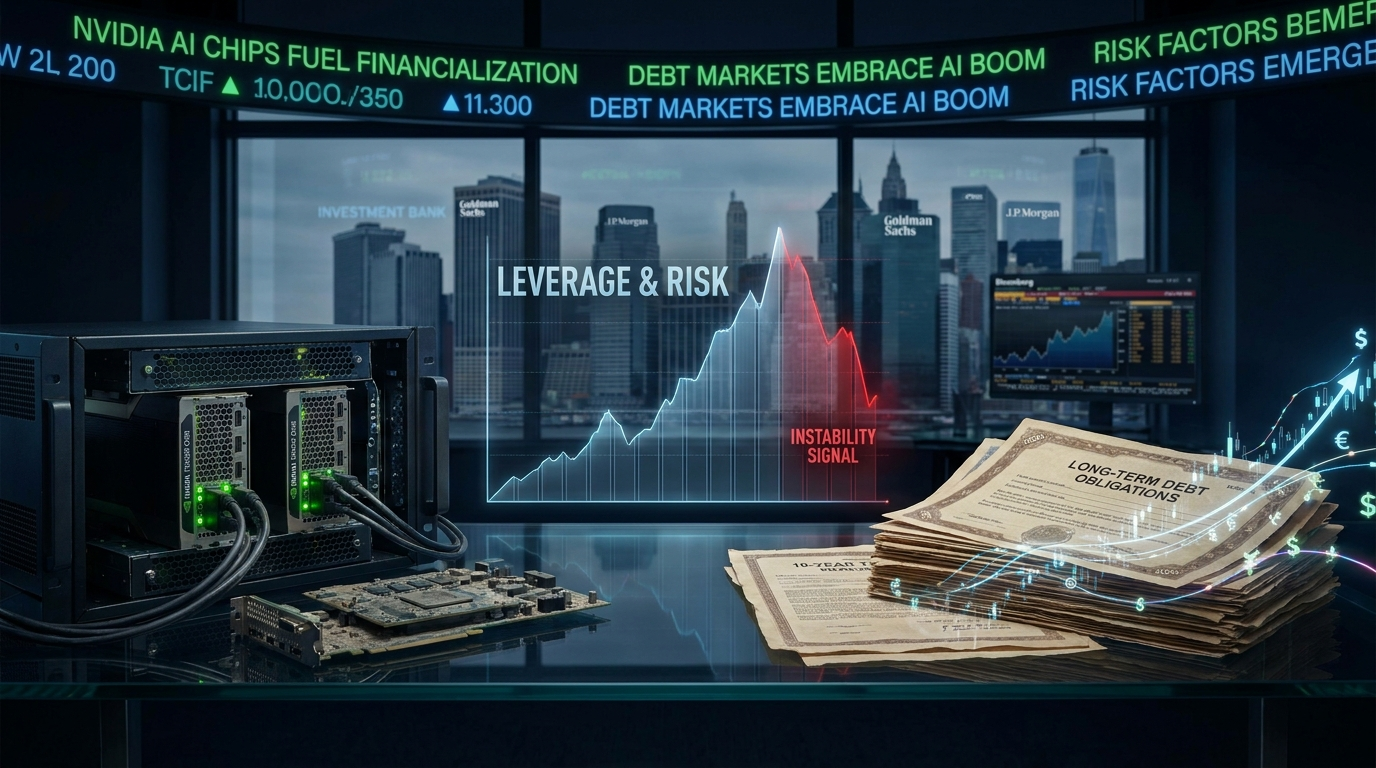
Nvidia has teamed up with major financial institutions including Apollo, BlackRock, Blackstone, Brookfield, Goldman Sachs and KKR to develop financing solutions for AI infrastructure.
The initiative could help mobilise more than $500 billion for companies looking to purchase Nvidia chips and build AI data centres.
And if computing power becomes essential infrastructure, it should be financed like other long-term infrastructure projects. But Gundlach questions whether AI hardware can really fit that model.
The “Banana” Analogy
Gundlach compared using rapidly depreciating AI chips as long-term collateral to using bananas to back a 30-year bond.
His point is not that Nvidia’s chips lack value, but how long is its value can realistically last, especially when AI hardware is evolving at an extraordinary pace. A chip generating strong returns today could become economically outdated much sooner than the debt used to finance it matures.
That creates a potential mismatch between short technology lifecycles and long-term financing.
Where the Risk Could Build
The bigger question is whether investors are beginning to price AI infrastructure as a permanent growth asset before its long-term economics have been fully tested.
If AI demand continues expanding, the financing model could work exceptionally well. But if chip prices fall, utilisation weakens or new technology rapidly replaces existing hardware, highly leveraged structures could face pressure.
That is why Gundlach sees the rise of AI-related financial engineering as a potential warning sign for broader risk markets.
The Real AI Bubble Test
This does not necessarily mean the AI boom is over. The technology could continue transforming industries and generating enormous demand for computing power.
But history shows that market excesses often emerge when strong underlying technology becomes the foundation for increasingly aggressive financial assumptions.
The question is no longer simply how much companies are spending on AI. It is whether Wall Street is starting to finance AI growth faster than the underlying economics can justify.
This marketing material is provided for informational purposes only and does not constitute investment advice, a recommendation, or an offer or solicitation to buy or sell any financial instruments.
Trading in securities involves significant risk and may not be suitable for all investors. Prices of securities may fluctuate significantly and may result in a total loss of your investment. Investors should be aware that losses may exceed potential profits when buying and selling securities. In certain market conditions, you may sustain losses that exceed your initial investment. Securities and contracts for differences are complex financial instruments that require a high level of knowledge and understanding. You should carefully consider whether you understand how these instruments work and whether you can afford to take the high risk of losing your money.


.png)