
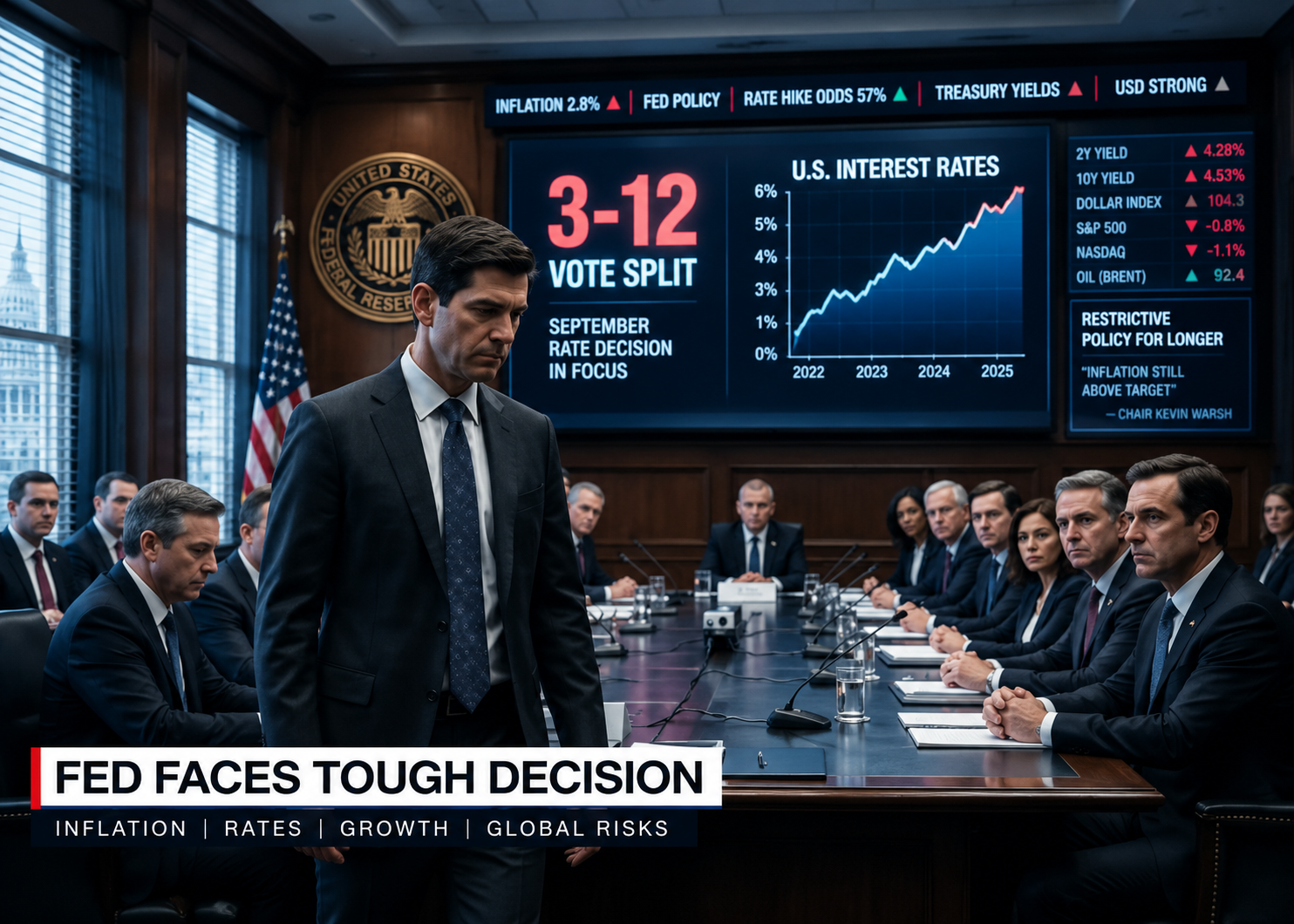
The Fed held its policy rate at 3.5%–3.75% for a fifth straight meeting in July, but 3 of the 12 voting members argued for a rate hike. Chair Kevin Warsh offered limited detail at the post-meeting press conference, leaving investors with few clues about how officials weighed inflation, growth and future policy risks.
That has increased the importance of the minutes. BMO Capital Markets chief economist Michael Gregory said the document has become more significant as policy statements grow shorter and forward guidance fades. FHN Financial strategist Will Compernolle similarly expects the minutes to reveal internal discussions that were previously less visible.
Could the Hawkish Camp Be Larger?
Markets will be watching whether the three officials who backed a hike were simply the most vocal members of a broader hawkish group.
Mizuho economist Alex Pelle expects the minutes to show stronger support for higher rates than the dissenting votes alone suggest. He believes the number of officials considering a rate increase may have expanded significantly from June.
The key question is whether a “silent majority” is emerging inside the committee, officials who are not yet ready to vote for a hike but increasingly see tighter policy as a realistic option.
Inflation Remains the Main Risk
Energy prices, Middle East tensions, tariffs and AI-related investment could all complicate the Fed’s inflation outlook. Earlier discussions highlighted a key divide: easing inflation could eventually justify rate cuts, while persistent price pressures could force policymakers to consider further tightening.
However, economic data released after the July meeting has weakened the case for immediate hikes. July payrolls declined, the labor force contracted, retail sales fell 0.6% month on month, and consumer confidence deteriorated.
What It Means for Markets
CME FedWatch currently puts the probability of rates remaining unchanged in September at 65%, compared with 35% for a 25-basis-point hike.
A more hawkish set of minutes could push Treasury yields and the dollar higher while pressuring rate-sensitive stocks. A clearer split within the Fed, meanwhile, could ease some pressure on equities.
Markets will get more clues from August employment and inflation data, followed by Warsh’s speech at the Jackson Hole symposium next week.
This marketing material is provided for informational purposes only and does not constitute investment advice, a recommendation, or an offer or solicitation to buy or sell any financial instruments.
Trading in securities involves significant risk and may not be suitable for all investors. Prices of securities may fluctuate significantly and may result in a total loss of your investment. Investors should be aware that losses may exceed potential profits when buying and selling securities. In certain market conditions, you may sustain losses that exceed your initial investment. Securities and contracts for differences are complex financial instruments that require a high level of knowledge and understanding. You should carefully consider whether you understand how these instruments work and whether you can afford to take the high risk of losing your money.

.png)