
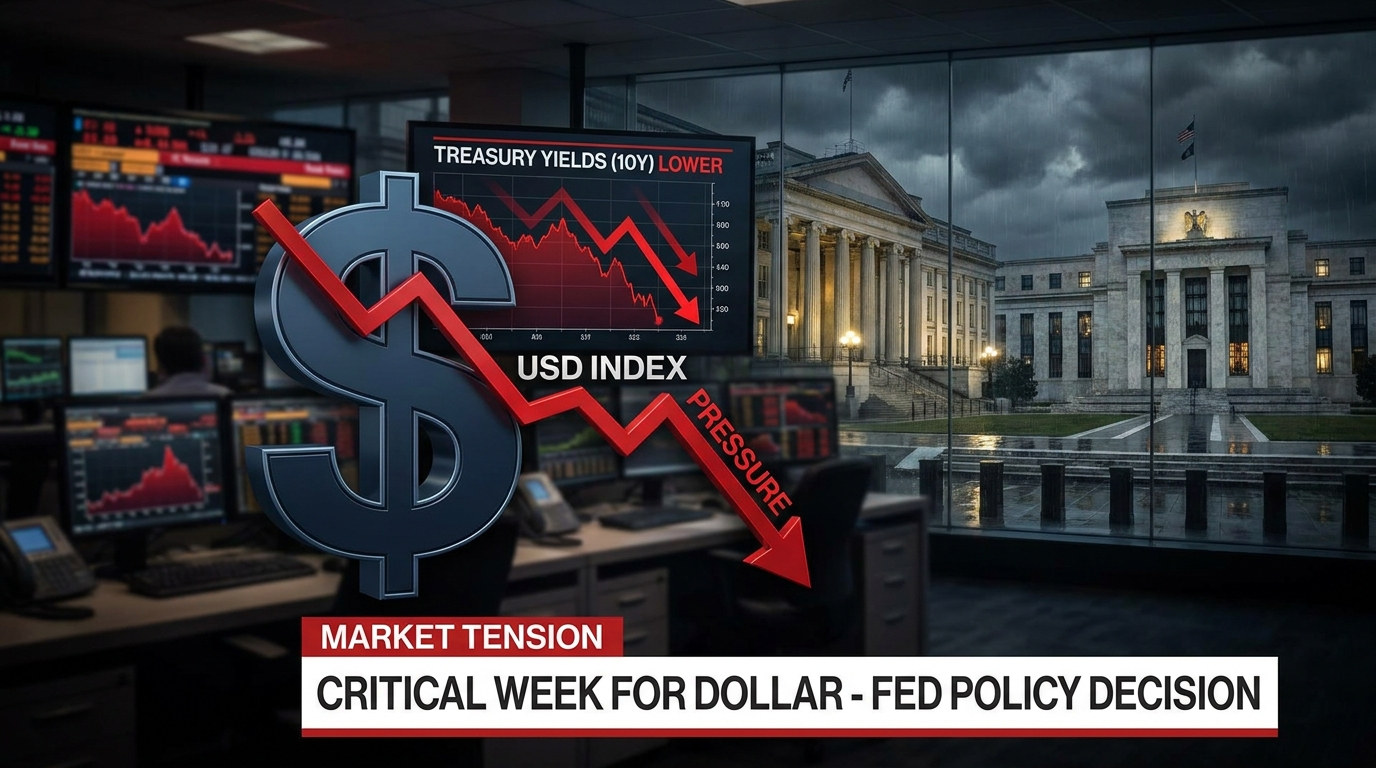
The dollar remained near multi-month lows on Monday despite stronger economic data. August services activity recorded its strongest growth in nearly two years, yet the currency’s broader downtrend remained intact.
Attention has instead focused on Treasury Secretary Scott Bessent’s decision to at least double long-term Treasury buybacks to $4 billion per operation. The amount is small relative to the roughly $32 trillion Treasury market, but investors interpreted the move as a stronger willingness by Washington to influence borrowing costs.
AMP investment strategist Shane Oliver said the intervention could reignite the “dollar debasement trade” as investors reassess the outlook for U.S. assets.
Options Markets Send a Clear Warning
The pressure is becoming increasingly visible in derivatives. Bloomberg data showed that the premium for one-month options protecting against a weaker dollar has climbed to its highest level since February.
Demand for bearish dollar structures has also broadened across major currencies. Swiss franc volatility saw one of the sharpest repricings, while similar measures for the euro, pound and Canadian dollar also moved higher.
DTCC clearing data added to the bearish signal: on August 21, demand for options betting against the dollar versus the euro exceeded demand for bullish positions by 47%.
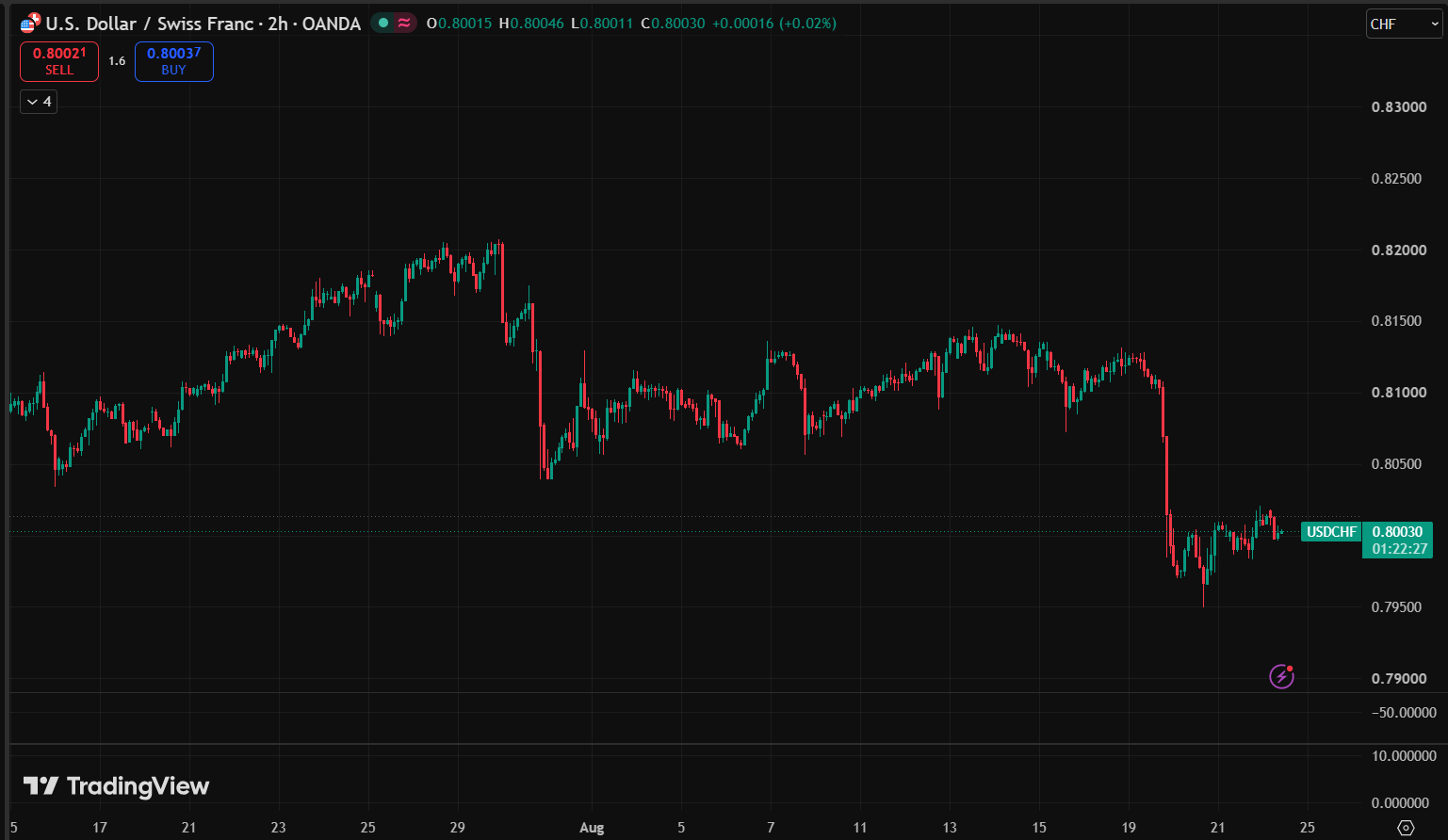
Chart: CHF/USD
All Eyes on Warsh
The next major catalyst comes Friday, when Federal Reserve Chair Kevin Warsh speaks at the Jackson Hole symposium.
Investors will be listening closely for comments on interest rates, the Fed’s balance sheet, Treasury duration supply and the term premium. BNY strategist Geoff Yu believes remarks on these issues could have a greater impact on long-term yields than incoming economic data.
At the same time, Washington is preparing to unveil further sanctions on Iran, while Bank of Japan Deputy Governor Ryozo Himino is due to speak Thursday.
Bonds Could Decide the Dollar’s Fate
For now, the Treasury market remains the key link between fiscal policy and the currency. Further declines in long-term yields could reinforce the bearish dollar trade, particularly if investors interpret Treasury intervention as a sign of growing financial repression.
But a hawkish signal from Warsh, renewed increases in Treasury yields or stronger confidence in U.S. growth could quickly challenge those positions.
With several major policy events arriving within days, the dollar may be heading toward a decisive test of its recent downtrend.
This marketing material is provided for informational purposes only and does not constitute investment advice, a recommendation, or an offer or solicitation to buy or sell any financial instruments.
Trading in securities involves significant risk and may not be suitable for all investors. Prices of securities may fluctuate significantly and may result in a total loss of your investment. Investors should be aware that losses may exceed potential profits when buying and selling securities. In certain market conditions, you may sustain losses that exceed your initial investment. Securities and contracts for differences are complex financial instruments that require a high level of knowledge and understanding. You should carefully consider whether you understand how these instruments work and whether you can afford to take the high risk of losing your money.


.png)