
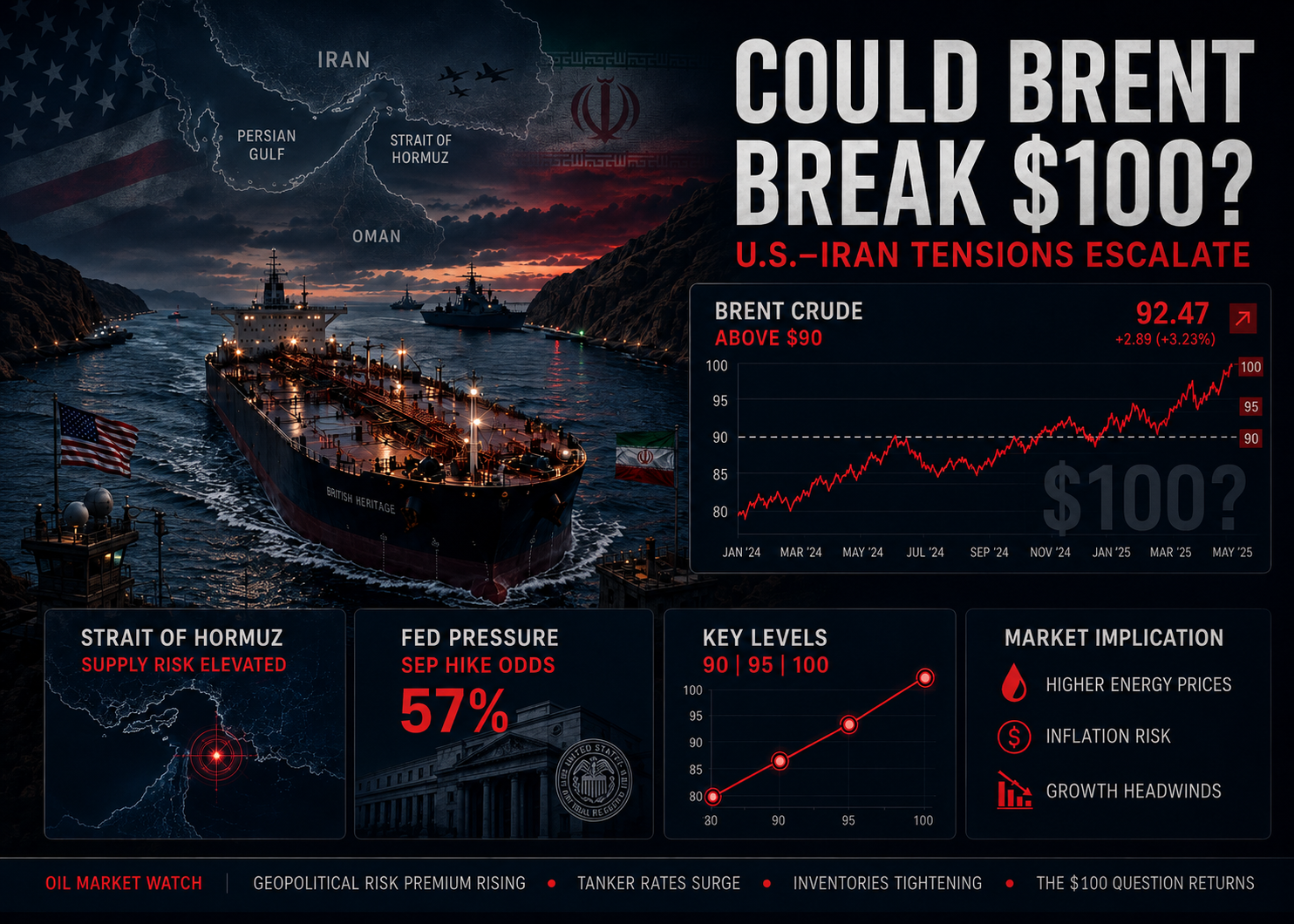
Brent crude rose more than 2% after the United States attacked Iranian positions on Larak Island in the Strait of Hormuz. Iran responded with strikes against U.S. military bases, increasing fears of further escalation.
The Strait of Hormuz remains one of the most important routes for global oil exports, which means any prolonged disruption could quickly affect crude prices.
Could Brent Reach $100?
For now, the $90 area is an important level for Brent.
If tensions remain contained and shipping conditions improve, oil could struggle to hold recent gains. However, another serious disruption to energy infrastructure or tanker traffic could push Brent toward $95 and potentially the psychological $100 level.
The opposite scenario is equally important. If tensions ease and Gulf export volumes continue to recover, part of the geopolitical risk premium could disappear quickly, potentially pushing Brent back toward the low-$80 area.
Higher Oil Adds Pressure on the Fed
Rising energy prices could also create another problem for the Federal Reserve.
Federal Reserve Chair Kevin Warsh has already reinforced concerns that U.S. monetary policy may need to remain restrictive while inflation stays above the Fed’s 2% objective. After his latest comments, markets increased the probability of a September rate hike to around 57%. Another sustained increase in energy prices could make that decision even more difficult.
Higher oil prices raise transportation and production costs and can eventually feed into broader consumer inflation. If Brent moves toward $100 and stays there, expectations for additional monetary tightening could strengthen. That would potentially support the
U.S. dollar while putting renewed pressure on bonds and interest-rate-sensitive equity sectors.
What Should Traders Watch?
The key factor remains the Strait of Hormuz.
A de-escalation could reduce the geopolitical risk premium in oil, while further attacks or supply disruptions could quickly bring $100 Brent back into discussion.
For traders, the main levels to watch are $90, $95 and $100, together with developments in the Middle East and changing expectations for U.S. interest rates.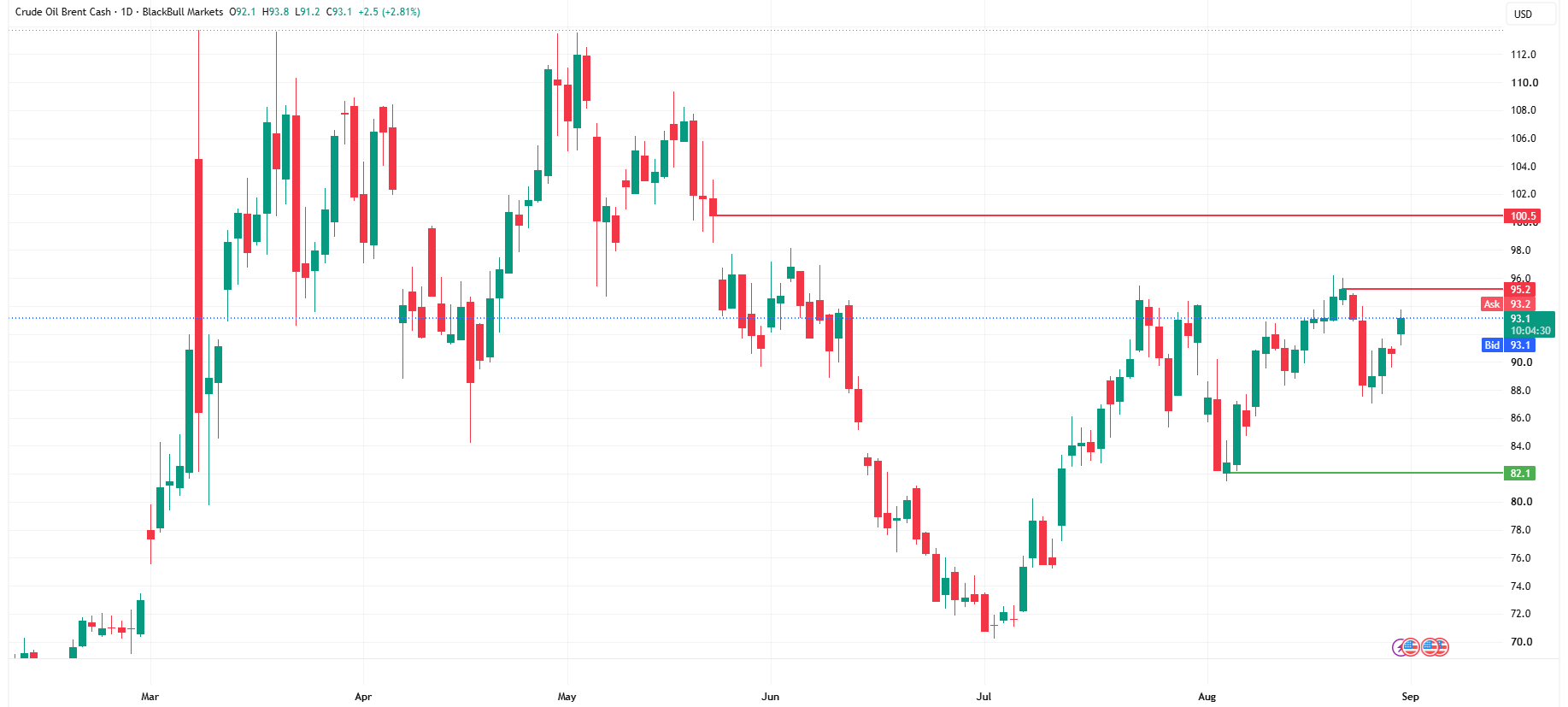
This marketing material is provided for informational purposes only and does not constitute investment advice, a recommendation, or an offer or solicitation to buy or sell any financial instruments.
Trading in securities involves significant risk and may not be suitable for all investors. Prices of securities may fluctuate significantly and may result in a total loss of your investment. Investors should be aware that losses may exceed potential profits when buying and selling securities. In certain market conditions, you may sustain losses that exceed your initial investment. Securities and contracts for differences are complex financial instruments that require a high level of knowledge and understanding. You should carefully consider whether you understand how these instruments work and whether you can afford to take the high risk of losing your money.

.png)