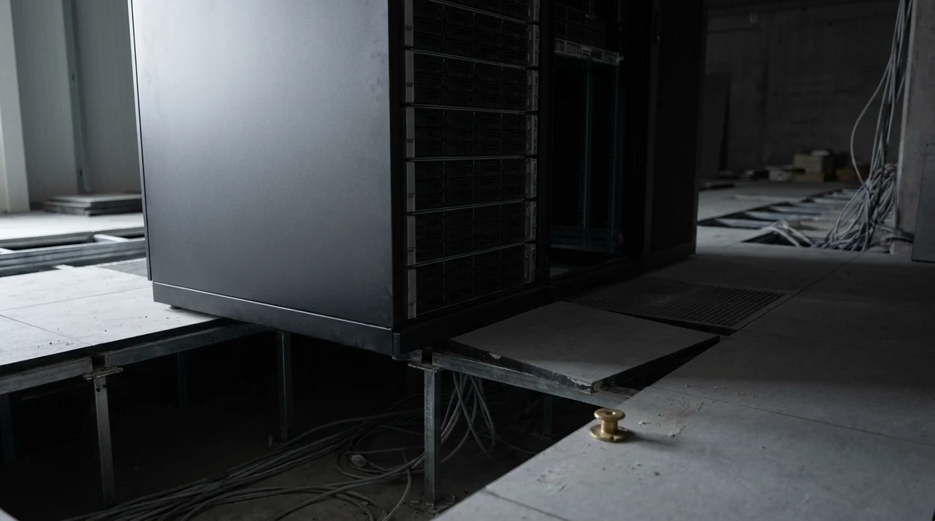
Alphabet reported $42.290 billion in operating cash flow and $51.355 billion in capital expenditure for the quarter ended September 30, leaving a $9.065 billion free cash flow deficit. That followed a $5.855 billion deficit in the second quarter, although free cash flow over the trailing twelve months remained positive at $19.747 billion. Chief financial officer Anat Ashkenazi said operating cash flow was also reduced by inventory accumulated for sales of Google’s custom AI chips and a $5.2 billion payment relating to a 2018 European Commission fine. The fine was a cash payment following the appeal process, distinct from current-quarter infrastructure purchases.
Search Growth Faces Several Pressures
Google Search and other advertising revenue increased 12% to $63.35 billion, while Google Services, which also includes YouTube and subscriptions, grew 11% to $96.3 billion. Chief business officer Philipp Schindler identified foreign exchange as the largest driver of Search’s growth deceleration from the preceding quarter, alongside changes in retail advertising and media spending after the World Cup. He also acknowledged that rising use of AI Mode affected growth because that format monetised less effectively. Google is expanding advertising across AI Mode and AI Overviews, while management expects a tougher comparison with late 2025 to pressure Search revenue growth in the fourth quarter.
Cloud Expansion Brings New Costs
Google Cloud revenue rose 103% to $30.7 billion, driven by demand for AI infrastructure and solutions, with sales of Google’s tensor processing unit systems making a meaningful contribution. Segment operating income reached $11.1 billion, compared with $3.6 billion a year earlier, demonstrating that the expansion was already generating operating profit. Ashkenazi put Cloud’s backlog at $561 billion and said just over 55% was expected to become revenue within 24 months. However, constrained supply led Google to begin using third-party computing capacity near the end of September, and management expects increased use of that capacity to weigh on near-term Cloud margins.
Investment Losses Distort Earnings Comparisons
Alphabet’s consolidated revenue increased 25% to $127.6 billion, and operating income rose 30% to $40.6 billion, despite the weaker cash conversion. Net income available to common shareholders fell to $26.2 billion from $35.0 billion, with diluted earnings per share declining to $2.12 from $2.87. An $8.7 billion loss on equity securities reduced quarterly net income by $6.7 billion after tax and earnings per share by $0.55, whereas the comparable quarter contained equity investment gains. That investment valuation movement sits below operating income and is separate from the capital expenditure deducted in calculating free cash flow.
Spending Plans Extend Into Next Year
Alphabet maintained its 2026 capital expenditure guidance at $195 billion to $205 billion, and Ashkenazi said spending would increase significantly in 2027, with details due on the fourth-quarter call. Management expects the infrastructure build-out to raise depreciation and data-centre operating costs, including energy, as the new assets enter service. The company issued senior unsecured notes for $28.7 billion in net proceeds during the quarter and raised approximately $12.4 billion through its at-the-market common share programme. Long-term debt reached $125.1 billion at September 30, compared with $46.5 billion at the end of 2025.
This marketing material is provided for informational purposes only and does not constitute investment advice, a recommendation, or an offer or solicitation to buy or sell any financial instruments.
Trading in securities involves significant risk and may not be suitable for all investors. Prices of securities may fluctuate significantly and may result in a total loss of your investment. Investors should be aware that losses may exceed potential profits when buying and selling securities. In certain market conditions, you may sustain losses that exceed your initial investment. Securities and contracts for differences are complex financial instruments that require a high level of knowledge and understanding. You should carefully consider whether you understand how these instruments work and whether you can afford to take the high risk of losing your money.
Source: https://s206.q4cdn.com/479360582/files/doc_financials/2026/q3/2026q3-alphabet-earnings-release.pdf