
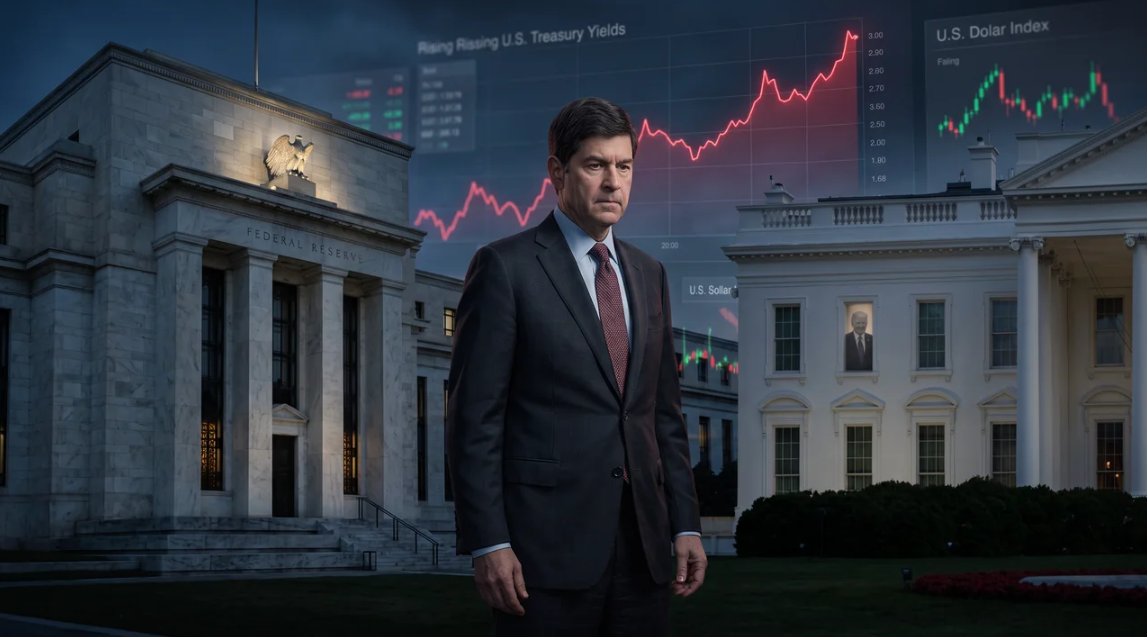
The pressure comes as the Fed remains divided over interest rates. At the July meeting, policymakers voted 9–3 to keep rates unchanged, with three officials supporting a 25-basis-point hike. Since then, several policymakers have suggested that further tightening may be necessary if inflation remains above the Fed’s 2% target.
If more officials shift toward the hawkish camp, every vote at the September meeting could become increasingly important.
Political Pressure Is Rising
It is no surprise that President Donald Trump has repeatedly called for lower interest rates and criticised the Fed for keeping policy too tight.
While the latest controversy involves Lisa Cook, whom the White House is seeking to remove over unproven mortgage fraud allegations.
The timing is significant, with Cook’s response deadline coming shortly before the September policy meeting.
The challenge is clear for Warsh. Supporting tighter policy could invite further political criticism, while appearing too dovish could raise questions about the Fed’s independence.
Why Markets Care
A loss of confidence in the Fed not only put additional pressure on the dollar, but on
the bond market itself.
If investors believe political pressure is influencing monetary policy, they could demand a higher inflation risk premium to hold longer-dated Treasuries. The long-term yields could spiked up even if the Fed eventually cuts short-term rates.
September Could Be a Key Test
The September meeting could determine how markets view the new Fed Chair's leadership.
Ultimately, the question is not simply whether the Fed hikes or cuts. It is whether Warsh can convince markets that the Fed still remains independent, and its ability in controlling inflation is not affected by political pressure.

.png)