
Strait of Hormuz Closure
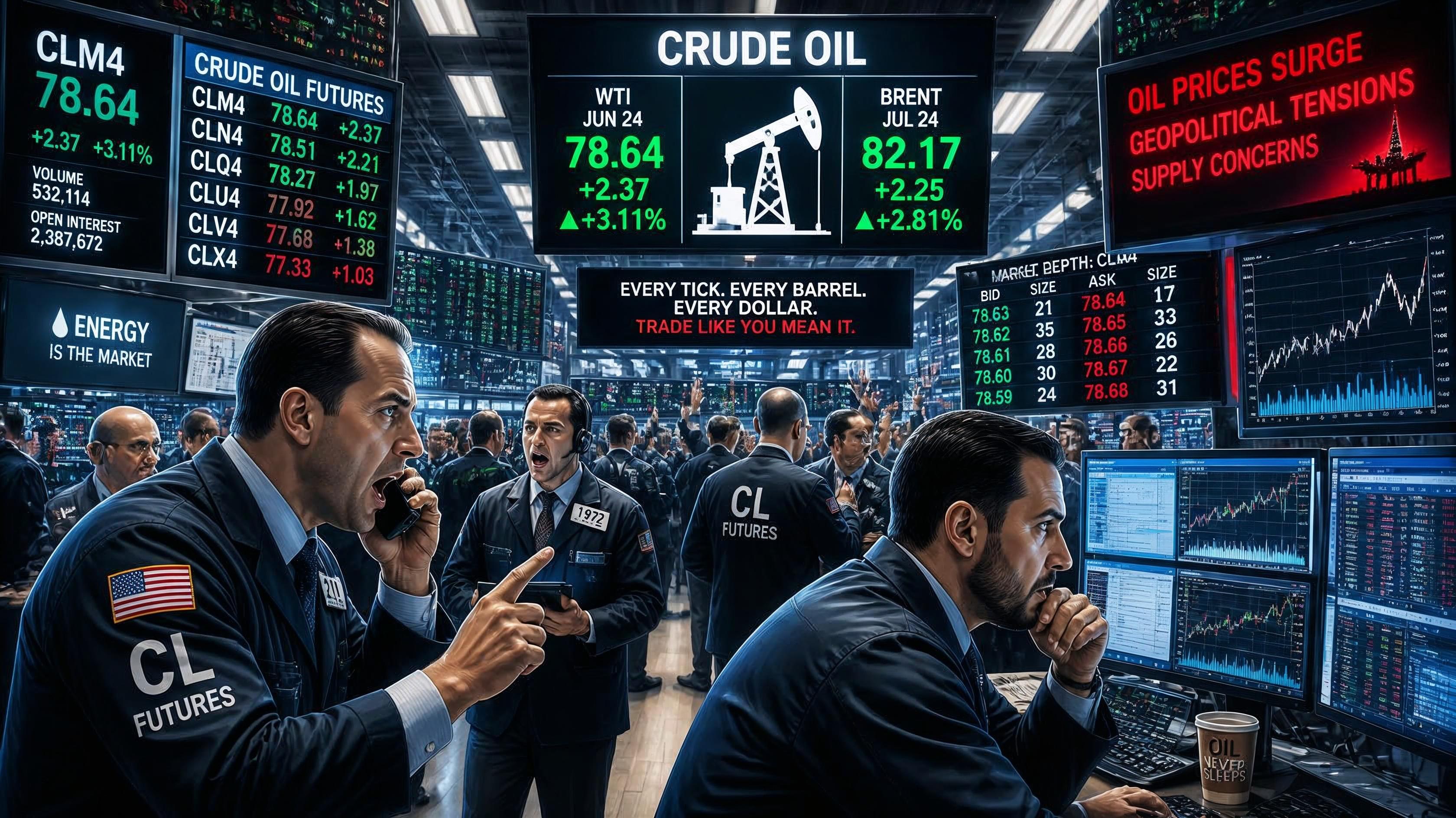
Over the weekend, a fresh wave of US military attacks against Iran triggered retaliatory strikes on US military sites in the Middle East, heightening fears of potential disruptions to the global crude supply. These escalating geopolitical risks have intensified concerns over supply tightening, contributing to upward pressure on global crude prices. Recent reports confirm that Iran has fully closed the Strait of Hormuz, halting commercial shipping through this critical chokepoint. Approximately 20% of global oil and liquefied natural gas (LNG) trade transits the Strait, underscoring its strategic importance to global energy markets.
WTI crude Short-term Technical Forecast
The $75 level represents immediate resistance, marking the recent price spike high. A sustained break above this threshold would confirm a bullish breakout and potentially pave the way for further gains. On the downside, the $71 zone, which corresponds to the start of the price gap, now serves as key support; maintaining above this level would preserve the bullish technical structure. Analysis of the WTI daily chart also reveals a slight structural improvement, with momentum indicators showing signs of recovery. The MACD is nearing a bullish crossover above its signal line, and the RSI has rebounded from oversold conditions to approximately 45 today.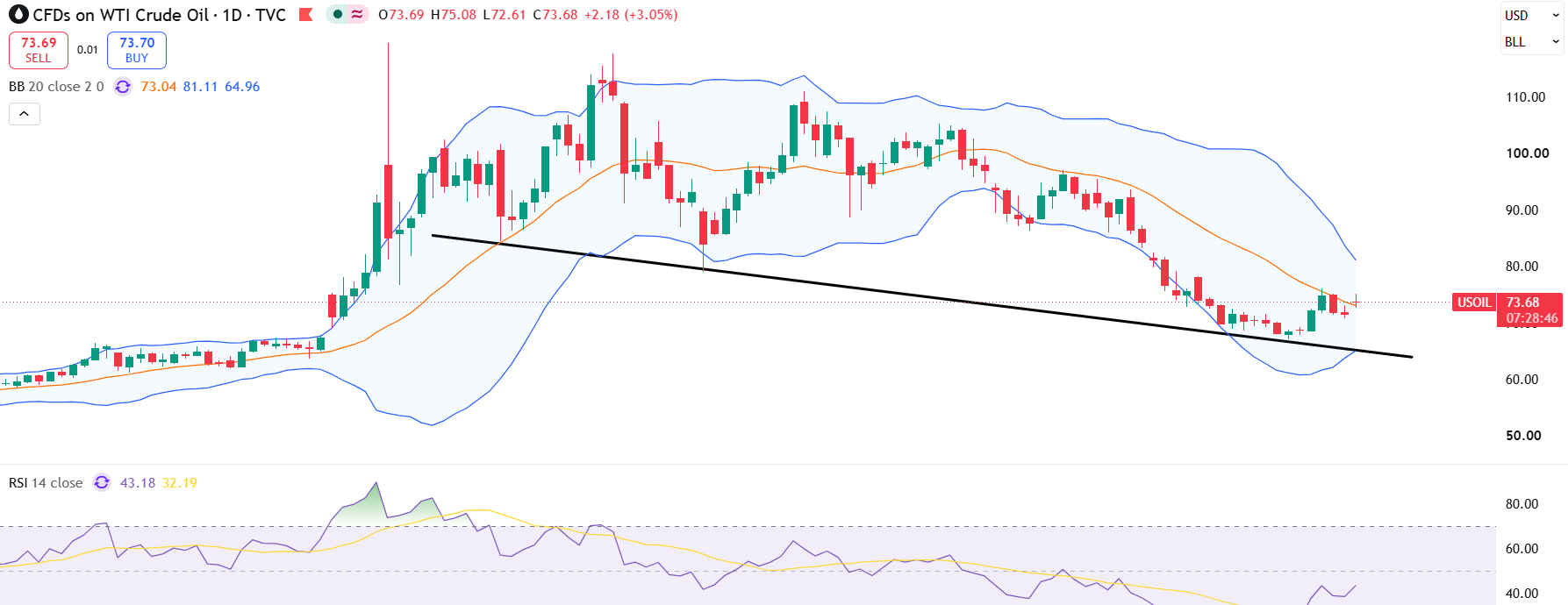
Bottom Line:
Overall, technical indicators suggest that US crude oil is in an upward correction phase, currently consolidating following the significant gap up. Key support is identified near $65.00, with immediate resistance around $76.30. Market participants remain cautious, closely monitoring ongoing US-Iran negotiations and geopolitical risks surrounding the Strait of Hormuz. Any extended disruption to shipping through this vital corridor could further tighten global supply and drive crude prices sharply higher.
This marketing material is provided for informational purposes only and does not constitute investment advice, a recommendation, or an offer or solicitation to buy or sell any financial instruments.
Trading in securities involves significant risk and may not be suitable for all investors. Prices of securities may fluctuate significantly and may result in a total loss of your investment. Investors should be aware that losses may exceed potential profits when buying and selling securities. In certain market conditions, you may sustain losses that exceed your initial investment. Securities and contracts for differences are complex financial instruments that require a high level of knowledge and understanding. You should carefully consider whether you understand how these instruments work and whether you can afford to take the high risk of losing your money.

.png)