
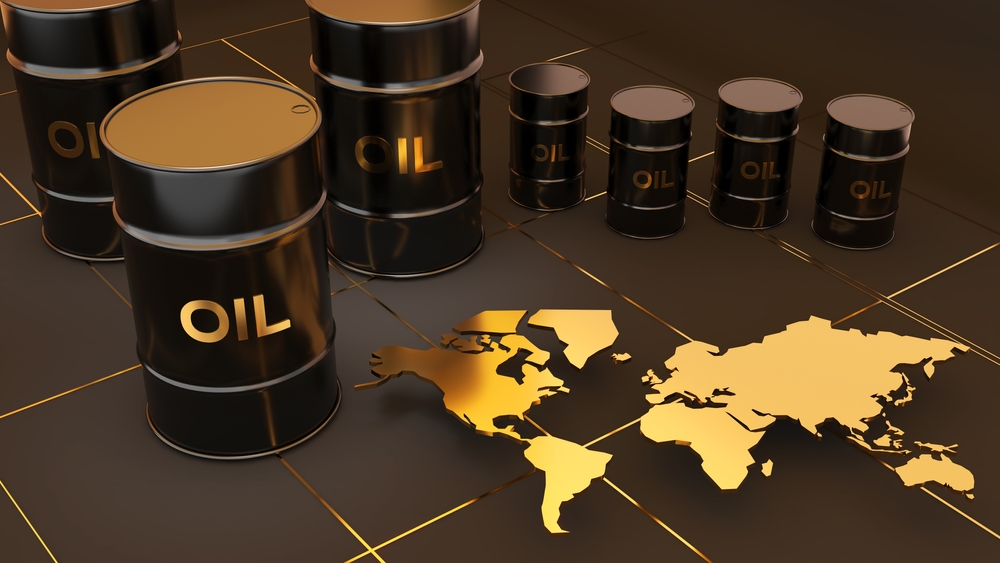
Why does oil react so quickly to geopolitical tensions
The oil market reacts immediately because a large part of global supplies passes through sensitive areas. One of the most important is the Strait of Hormuz. According to the US EIA, an average of about 20 million barrels of oil per day passed through it in 2024, which corresponds to approximately 20% of global oil consumption. In the first half of 2025, its importance remained similar. When there is a risk that tankers will be delayed or traffic through this point will be restricted, oil prices usually rise immediately. This is because the market knows that a problem in such a location can very quickly affect Asia, Europe, and the whole world.
Wars and sanctions can change market supply
Geopolitical events have the strongest impact on oil prices when they threaten production or exports themselves. This can happen during wars, revolutions, or after sanctions are imposed. The US EIA notes that among the biggest historical oil shocks were the Arab oil embargo in 1973 and 1974, the Iranian revolution, the Iran-Iraq war, and the Gulf War in 1990. In all these cases, the market feared that less oil would reach consumers. Sanctions can have a similar effect to war because even if a country continues to produce oil, its sale and transport become much more complicated. The market, therefore, does not usually wait for an actual shortage, but reacts as soon as the risk begins to appear serious.
The current situation between the US, Israel, and Iran and its impact on oil
This is exactly what we are seeing now. On March 9, 2026, oil prices rose sharply after the conflict between the US, Israel, and Iran escalated, and the market began to fear a prolonged disruption of supplies from the region. Oil prices jumped about 25% during the day, reaching their highest levels since mid-2022. Brent briefly climbed to $119.50 per barrel and later gave up some of its gains. According to AP, it then hovered around $106 per barrel, while US WTI crude oil retreated to around $103 after a sharp rise.* The main reason is not that the world suddenly needs much more oil, but the fear that the conflict will affect exports and shipping in the Persian Gulf. Since about one-fifth of the world's consumption of oil and oil products passes through the Strait of Hormuz, any tension in the area has an immediate impact on prices.
Conclusion
Geopolitical events drive oil prices because they create uncertainty around production, exports, and transportation. The market reacts most sensitively when the Middle East or important shipping routes are threatened. History shows that wars, sanctions, and political crises can cause sharp price spikes, and the current conflict between the US, Israel, and Iran is a clear example of this. The main lesson is simple. The price of oil depends not only on how much is produced, but also on how safe it is to get it to the world market.
* Past performance is no guarantee of future results.

.png)