
.png)
The precious metals meltdown continues as safe-haven demand for metals softens. Gold started the week on a positive note, reaching a fresh two-week high during the early Asian session on Thursday. However, after a strong pump on Wednesday, gold bulls lost steam as the US dollar strengthened following President Donald Trump's warning of more aggressive strikes against Iran.
Rising Inflation and Rate Hike Fears Weigh on Sentiment
The escalated tensions in the Middle East have already resulted in a further spike in crude oil prices, which could feed into inflation data and increase the likelihood that the Federal Reserve will maintain rates at current levels for longer. Gold is widely regarded as a hedge against inflation and uncertainty, but higher interest rates reduce the appeal of the non-yielding asset.
Strong US economic data also tempered hopes for near-term Federal Reserve rate cuts. Wednesday’s reports showed US factory activity expanded for the third consecutive month in March, with the ISM Manufacturing Index rising to 52.7, surpassing forecasts of 52.5. Additionally, the ADP National Employment report revealed a better-than-expected gain of 62,000 jobs in March, reinforcing expectations that policymakers may keep rates elevated.
Looking Ahead
The key event for gold this week is the release of the US Non-Farm Payroll data on Friday. This data is expected to influence future Federal Reserve policy decisions amid ongoing caution. Additionally, US bond yields and overall market risk sentiment will affect the dynamics of the US dollar, which in turn will impact gold prices. Please be aware that there will be no gold markets on Friday, April 3, because of several market closures for the Good Friday holiday.
Gold (XAUUSD) Technical Outlook
The technical scenario is turned neutral to bearish again, and attempts to exit the current bearish channel will not succeed without moving above the $4,800 resistance. Currently, gold trades above $4,630. On the downside, immediate support lies near the early European session low of $4,550. Failure to hold this support could push prices further down toward the $4,500 to $4,480 support zones.
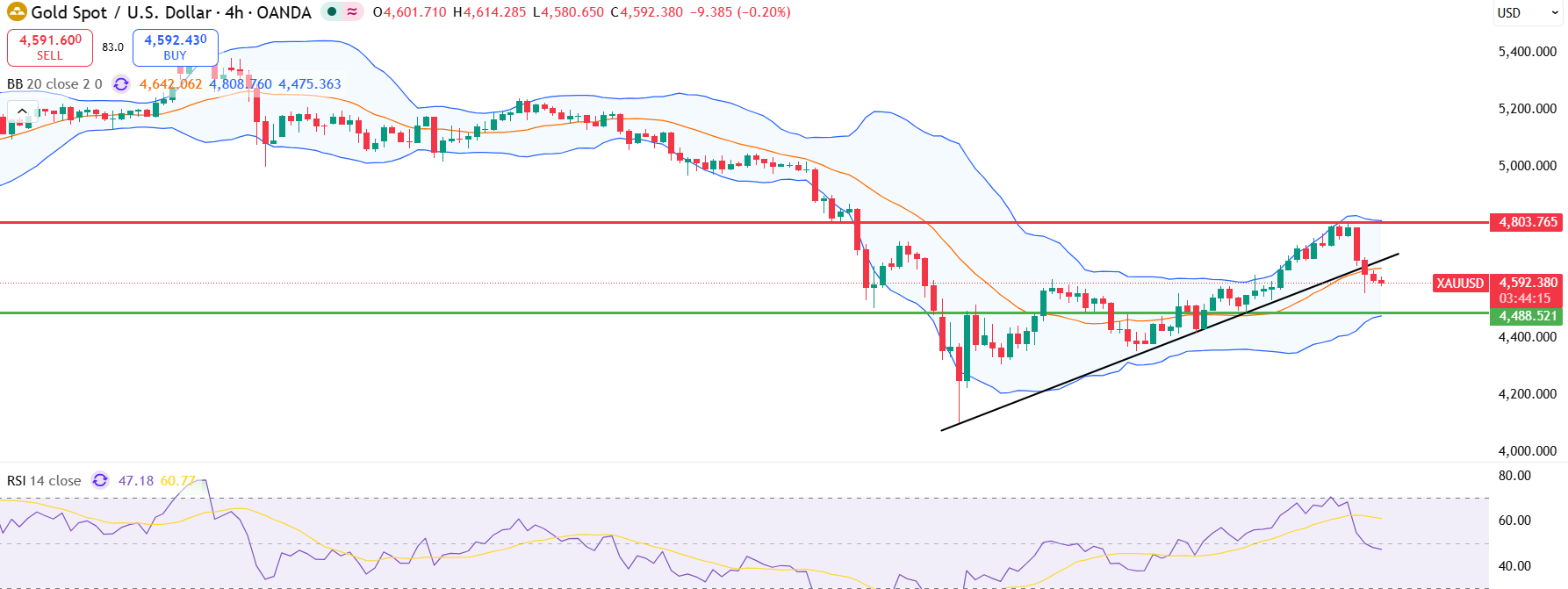
Conversely, a daily close above $4,800 would invalidate the bearish scenario and could trigger a rally toward the next resistance zone at $4,880 to $4,900.
This marketing material is provided for informational purposes only and does not constitute investment advice, a recommendation, or an offer or solicitation to buy or sell any financial instruments.
Trading in securities involves significant risk and may not be suitable for all investors. Prices of securities may fluctuate significantly and may result in a total loss of your investment. Investors should be aware that losses may exceed potential profits when buying and selling securities. In certain market conditions, you may sustain losses that exceed your initial investment. Securities and contracts for differences are complex financial instruments that require a high level of knowledge and understanding. You should carefully consider whether you understand how these instruments work and whether you can afford to take the high risk of losing your money.


.png)