

On Monday, the US dollar edged lower as investors weighed reports of a potential ceasefire in the Middle East. However, Iran rejected the 45-day ceasefire proposal and refused to reopen the Strait of Hormuz for a temporary truce. The dollar’s retreat extended following the release of weaker-than-expected US ISM services PMI data, which fell to 54 in March compared to forecasts of 55, signaling a slowdown in services activity.
USD: Looking for clear direction
Technically, price action appears to be consolidating. As the North American session progresses, USD traders will focus on February’s US durable goods orders data, scheduled for release at 12:30 GMT. However, the dollar is likely to trade sideways ahead of President Trump’s midnight Tuesday deadline, which may trigger increased volatility.
Dollar Index Technical Outlook
Despite the recent pullback, the uptrend remains intact as long as the DXY trades above the 99.00/98.80 support zone. Currently, the index trades below 99.70 but needs to break and close above the 100/100.30 resistance level for further upside momentum. If the index manages to settle above 100.30, it will head towards the next resistance level of 100.80.
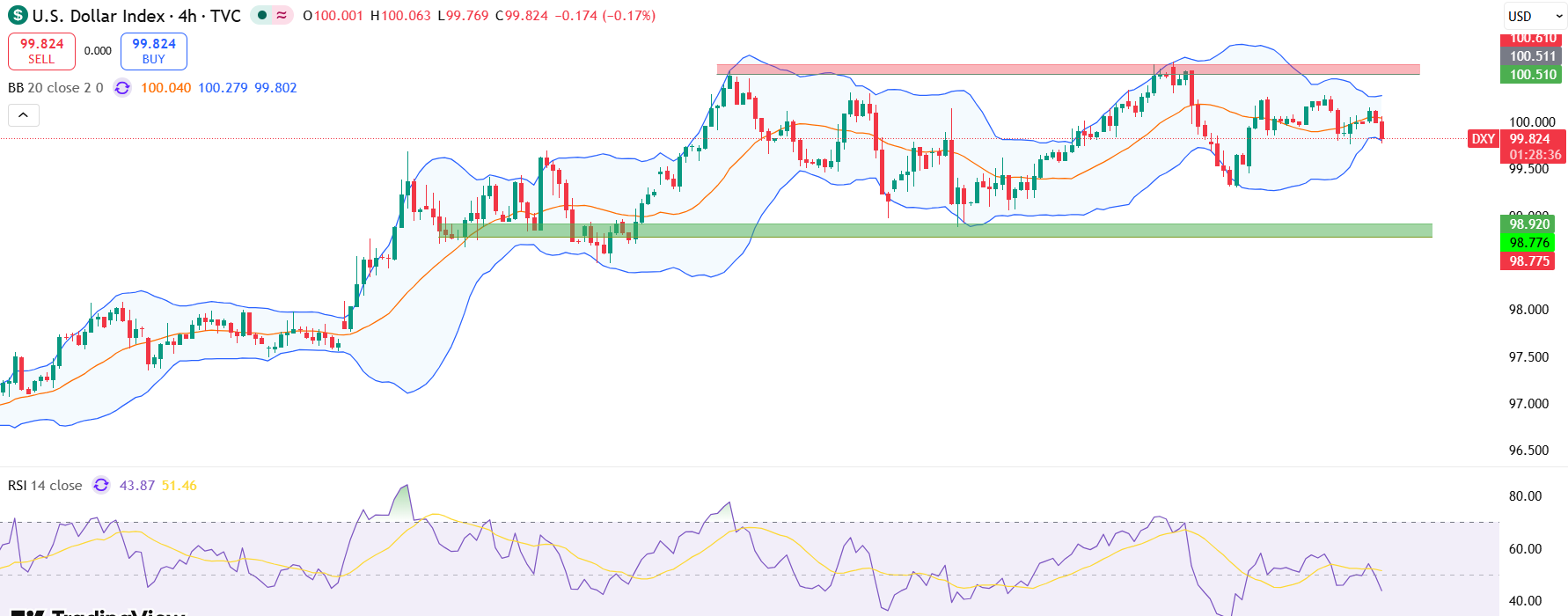
On the downside, immediate support lies at 99.60, followed by 99.30/99.10. Bears will look for a confirmed break below the critical 99.00/98.80 support to trigger a strong bearish move. A breach of 98.80 would invalidate the bullish trend and could lead to a sharp sell-off toward 98.30/98.00.
This marketing material is provided for informational purposes only and does not constitute investment advice, a recommendation, or an offer or solicitation to buy or sell any financial instruments.
Trading in securities involves significant risk and may not be suitable for all investors. Prices of securities may fluctuate significantly and may result in a total loss of your investment. Investors should be aware that losses may exceed potential profits when buying and selling securities. In certain market conditions, you may sustain losses that exceed your initial investment. Securities and contracts for differences are complex financial instruments that require a high level of knowledge and understanding. You should carefully consider whether you understand how these instruments work and whether you can afford to take the high risk of losing your money.

.png)